If you’re planning a concrete project whether for a garage foundation, driveway, patio, or commercial space understanding concrete slab cost in 2026 upfront saves you from surprises and helps you budget accurately. Concrete slab pricing has shifted significantly over the past few years due to inflation, material availability, and regional labor variations, making it more important than ever to understand what you’re actually paying for.
This guide breaks down concrete slab costs in detail, reveals what drives pricing, and gives you the knowledge to make informed decisions when getting quotes from contractors.
What Is a Concrete Slab?
A concrete slab is a flat, horizontal surface of concrete poured directly on prepared ground. It serves as a foundation or wearing surface for driveways, patios, garage floors, basement floors, warehouse spaces, and commercial facilities.
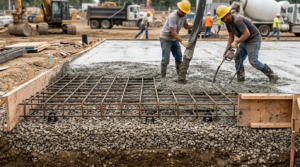
The basic structure of a concrete slab includes:
- Subgrade preparation – The soil or base layer
- Base course – Gravel or crushed stone (typically 4–6 inches)
- Rebar or wire mesh – Reinforcement to prevent cracking
- Concrete pour – The actual concrete layer (usually 4–6 inches thick)
- Finishing – Smoothing, sealing, or texturing the surface
Concrete slabs are popular because they’re durable, require minimal maintenance, and provide a stable foundation for buildings and surfaces.
Average Concrete Slab Cost in 2026
National Baseline Pricing
For 2026, expect to pay between $4 and $8 per square foot for a standard concrete slab installation. For a typical 400-square-foot garage foundation, that translates to roughly $1,600 to $3,200 in total costs.
However, this baseline varies considerably based on location, project type, concrete grade, thickness, and site conditions.
Regional Variations:
- Tennessee (Mid-South): $4.50–$7.50/sq ft
- Urban areas (Nashville, Memphis): $6–$8.50/sq ft
- Rural or suburban areas: $4–$6/sq ft
- Major metropolitan regions: $7–$10+/sq ft
If you’re in Columbia, Franklin, Spring Hill, or Brentwood, TN, pricing typically falls in the mid-range for the region, though local labor rates and material delivery costs affect final quotes.
Cost Breakdown by Concrete Slab Type
1. Basic Concrete Slabs (Utilitarian)
Cost Range: $4–$6 per square foot
Used for garage floors, utility areas, and spaces where appearance is secondary to function.
- Minimal finishing
- Standard 4-inch thickness
- Basic reinforcement
- No decorative elements
- Best for: Garages, storage areas, workshops
2. Standard Foundation or Patio Slabs
Cost Range: $5–$7 per square foot
These slabs serve residential purposes where durability and basic aesthetics matter.
- Proper grading and drainage
- 4–6 inch thickness
- Standard reinforcement
- Basic broom finish or light smoothing
- Best for: Residential driveways, patios, concrete foundation work
3. Finished/Polished Slabs
Cost Range: $7–$10 per square foot
These slabs receive decorative finishing and are meant to be visible surfaces.
- Polished or sealed finish
- Color options available
- Stain resistance treatments
- Enhanced appearance and durability
- Best for: Modern interiors, showrooms, high-end patios
4. Commercial-Grade Slabs
Cost Range: $6–$12+ per square foot
Industrial and commercial slabs designed for heavy traffic and high durability standards.
- Thicker concrete (5–8 inches)
- Heavy-duty reinforcement (rebar)
- Epoxy or polyurethane coatings
- Load-bearing specifications
- Best for: Warehouses, retail spaces, industrial facilities, commercial concrete slab installation
5. Specialty Slabs
Cost Range: $10–$18+ per square foot
Slabs with special requirements like heated floors, enhanced drainage, or decorative stamping.
- Radiant heating systems: +$2–$5/sq ft
- Stamped or decorative finishes: +$3–$8/sq ft
- Advanced drainage systems: +$1–$3/sq ft
Key Factors That Influence Concrete Slab Costs
1. Size of the Project
Smaller projects (under 200 square feet) cost more per square foot due to fixed setup costs being spread across less area. Larger projects benefit from economies of scale:
- Small slabs (100–200 sq ft): 10–15% higher per sq ft cost
- Medium slabs (200–500 sq ft): Standard pricing applies
- Large slabs (500+ sq ft): 5–10% discount per sq ft possible
2. Site Preparation and Accessibility
Difficult site conditions dramatically increase costs:
- Easy access, level ground: Baseline cost
- Grading or excavation required: +$0.50–$1.50/sq ft
- Challenging terrain: +$1.50–$3/sq ft
- Poor drainage conditions: +$0.75–$2/sq ft
Contractors need clear access for concrete trucks (typically 10–12 feet wide). Narrow driveways, tight lots, or restricted entry can require smaller pump trucks or hand-pours, which cost significantly more.
3. Concrete Grade and Thickness
Standard concrete is 3,000–4,000 PSI (pounds per square inch). Specialty grades cost more:
- Standard 4-inch slab: Baseline cost
- 6-inch thickness: +$1–$1.50/sq ft
- 8-inch thickness: +$2–$2.50/sq ft
- High-strength concrete (5,000+ PSI): +$0.50–$1.50/sq ft
Climate matters too. In regions with freeze-thaw cycles, thicker concrete and air-entrained mixes (which resist ice damage) are recommended, adding $0.50–$1/sq ft.
4. Reinforcement Type
Reinforcement prevents cracking and adds cost:
- Wire mesh: +$0.25–$0.50/sq ft
- Rebar (standard): +$0.50–$1/sq ft
- Heavy rebar (commercial): +$1–$2/sq ft
- No reinforcement: Saves money but risks cracking in freeze-thaw climates
5. Finishing and Surface Treatment
Finishing methods vary widely in cost:
- Basic broom finish: Included or minimal cost
- Smooth troweled finish: +$0.50–$1/sq ft
- Sealed concrete: +$0.75–$1.50/sq ft
- Polished concrete: +$2–$5/sq ft
- Stained or decorative: +$3–$8/sq ft
6. Local Labor Rates and Material Costs
Labor is 40–60% of concrete slab costs. Urban areas and high-demand seasons command premium rates:
- Rural Tennessee: Lower labor rates
- Nashville metropolitan area: 15–25% higher labor costs
- Peak season (spring/summer): Possible 10–15% premium
- Off-season (fall/winter): Potential 5–10% discounts
Concrete material prices fluctuate based on cement availability and fuel costs. In 2026, prices have stabilized somewhat after 2021–2023 volatility, but regional variations persist.
7. Permit and Inspection Requirements
Some jurisdictions require permits for concrete work, adding cost:
- Residential (under 500 sq ft): Often exempt
- Commercial projects: Permits typically required ($100–$500)
- Inspections: May require professional engineering ($200–$500)
Ask your contractor whether permits are included in the quote.
Real-World Pricing Examples for 2026
1: Basic Residential Driveway (300 sq ft)
- Material: $1,200–$1,500
- Labor: $900–$1,200
- Site prep (minimal): Included
- Total: $2,100–$2,700 ($7–$9/sq ft)
2: Garage Foundation (400 sq ft) with Proper Reinforcement
- Material: $1,600–$2,000
- Labor: $1,200–$1,600
- Rebar reinforcement: +$200–$400
- Grading and prep: +$300–$600
- Total: $3,300–$4,600 ($8.25–$11.50/sq ft)
3: Commercial Warehouse Slab (5,000 sq ft)
- Material: $15,000–$20,000
- Labor: $12,000–$18,000
- Heavy-duty reinforcement: +$3,000–$5,000
- Finishing and epoxy coating: +$5,000–$8,000
- Total: $35,000–$51,000 ($7–$10.20/sq ft)
These estimates assume standard conditions. Difficult terrain, poor drainage, or specialty finishes will increase costs.
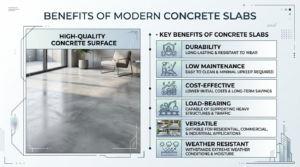
Benefits of Concrete Slabs
Durability: Properly installed concrete slabs last 30+ years with minimal maintenance.
Low maintenance: Unlike other surfaces, concrete requires only occasional cleaning and resealing.
Cost-effective: Among the most affordable foundation and surface options available.
Load-bearing capacity: Handles heavy equipment, vehicles, and structures without deflection.
Versatility: Works for residential, commercial, and industrial applications.
Weather resistance: Stands up to freeze-thaw cycles, moisture, and UV exposure.
Limitations and Honest Challenges
Cracking: Concrete naturally develops cracks, especially in freeze-thaw climates. Hairline cracks are cosmetic; wider cracks indicate structural issues.
Moisture: Without proper vapor barriers and sealing, concrete can absorb water, causing problems for flooring and basements.
Slippery surface: Polished or sealed concrete can be hazardous when wet. Textured finishes or anti-slip additives help.
Repair difficulty: Patching concrete is visible. Major damage often requires removal and replacement.
Not suitable for all climates: In extremely harsh freeze-thaw environments, concrete requires specialized mixes and thicker installations.
Common Mistakes Homeowners and Business Owners Make
- Skipping proper site preparation
Inadequate grading or missing base layers lead to cracking and settling within 1–3 years. Proper prep costs extra upfront but prevents costly repairs. - Choosing the cheapest quote without vetting credentials
Low-ball quotes often reflect cutting corners on concrete quality, reinforcement, or labor expertise. Mid-range quotes are usually more reliable. - Ignoring drainage requirements
Poor drainage causes water pooling and premature slab failure. Proper grading and drainage solutions are essential in Tennessee’s humid climate. - Underestimating project scale
Getting a quote for 300 square feet when the actual project is 500 square feet wastes time. Measure carefully before requesting quotes. - Failing to plan for curing time
Concrete needs 7 days minimum curing before light use and 28 days before full load application. Rushing this process weakens the slab. - Not discussing weather conditions
Concrete poured during extreme heat or rain may not cure properly. Good contractors discuss optimal timing with clients.
Expert Tips for Getting the Best Value
Get 3 detailed quotes. Compare identical specifications: thickness, reinforcement type, finishing method, and warranty terms. Don’t fixate on the lowest price.
Ask about material quality. Request specific details on concrete mix design (PSI), air entrainment for freeze-thaw protection, and aggregates used.
Verify licensing and insurance. Ensure the contractor is licensed, bonded, and carries liability insurance. It protects both you and them.
Request a site inspection before quoting. Reputable contractors assess drainage, soil conditions, and access before providing estimates. Quotes based only on phone calls are less reliable.
Discuss curing and maintenance. Ask about recommended curing times, sealing schedules, and long-term maintenance. A contractor who explains these details cares about longevity.
Plan for seasonal timing. If scheduling flexibility exists, concrete poured in spring or early fall often costs slightly less and may cure better than summer heat pours.
Get written contracts. Ensure all scope details, timelines, payment schedules, and warranties are documented. Verbal agreements lead to disputes.
Concrete Slab Costs in Tennessee
If you’re planning a concrete slab project in Tennessee, costs vary by region:
- Spring Hill, TN: $4.50–$7/sq ft
- Franklin, TN: $5–$7.50/sq ft
- Brentwood, TN: $5.50–$8/sq ft
- Columbia, TN: $4.50–$6.50/sq ft
Urban areas tend toward the higher end of these ranges, while rural areas fall toward the lower end. For more detailed regional pricing, check our guide on concrete cost per yard Columbia TN.
Frequently Asked Questions
Q: What causes concrete cracking, and is it normal?
A: Hairline cracks (less than 1/8 inch) are normal due to concrete shrinkage as it cures. Wider cracks indicate settlement, drainage problems, or inadequate reinforcement. Prevention includes proper site prep, reinforcement, and drainage management.
Q: Can I pour concrete in cold weather?
A: Concrete poured below 50°F requires special additives and extended curing times, increasing costs 10–20%. Below 40°F, pouring isn’t recommended. Proper timing in Tennessee typically means avoiding winter months unless absolutely necessary.
Q: What’s the difference between concrete cost per yard and cost per square foot?
A: Per-yard pricing ($180–$280/cubic yard in 2026) reflects material only. Per-square-foot pricing ($4–$8) includes material, labor, equipment, and finishing. Use per-square-foot quotes for complete project budgeting.
Q: Do I need a vapor barrier under my slab?
A: For basements or indoor spaces where flooring will be installed, a vapor barrier ($0.10–$0.25/sq ft) is essential to prevent moisture damage. For exterior driveways or patios, proper grading handles moisture management.
Q: What should I do if my concrete slab cracks after installation?
A: Hairline cracks are cosmetic and don’t affect structural integrity. Wider cracks (more than 1/4 inch) should be evaluated by a professional. Repairs range from simple caulking ($100–$300) to full resurfacing ($1–$2/sq ft) depending on crack severity.
Ready to Move Forward with Your Concrete Slab Project?
Understanding concrete slab cost in 2026 empowers you to make smart decisions and invest wisely in a surface that lasts decades. Whether you’re building a concrete foundation for a new structure or pouring a practical slab for a driveway or garage, proper planning and professional installation make all the difference.
If you’re in Tennessee and ready to discuss your concrete slab project, we’re here to help. Our team has installed hundreds of slabs across the region and understands local soil conditions, climate challenges, and cost-effective solutions.
Contact us today for a free consultation and detailed quote. Call 931-416-5131 to speak with an experienced concrete specialist.
We proudly serve Spring Hill, Franklin, Brentwood, Columbia, and surrounding communities with professional, transparent concrete slab installation backed by decades of experience.