Concrete pouring in winter in Columbia, TN is possible, but it takes planning, smart timing and real protection for fresh concrete. Cold air slows setting, frozen ground can ruin a base, and one hard freeze at the wrong moment can weaken a slab before you ever use it. If you are comparing concrete contractors in Columbia, TN, this guide explains what winter does to wet concrete, which projects work best and what to ask before you schedule a pour.
What Is Cold-Weather Concrete Pouring?
Industry groups treat cold weather as its own category of work. The American Concrete Institute explains in its ACI cold-weather concreting guidelines that cold weather means the average daily temperature stays below 40 degrees Fahrenheit for more than three days. During that time, the goal is to keep fresh concrete from freezing, hold steady curing conditions and avoid sudden temperature swings.
Key points to remember:
- Fresh concrete can freeze when it drops to about 25 degrees Fahrenheit.
- Concrete that freezes early can lose more than half of its potential strength.
- Fresh concrete needs protection from freezing until it reaches about 500 psi, which takes roughly two days.
- Cold slows everything down. A 20 degree drop in concrete temperature can roughly double the setting time.
- Concrete that will touch water and face freeze and thaw cycles should be air-entrained.
Can You Do Concrete Pouring in Winter in Columbia, TN?
Yes, with conditions. Middle Tennessee winters swing between mild afternoons and frosty nights, so many days are workable while others are not. The job is to match the pour to the forecast instead of the calendar.
Local conditions add to the challenge:
- Clay soil: Clay holds moisture and moves as it freezes and thaws, so a weak base shows problems fast.
- Wet ground: Rain and soft soil make grading and compaction harder.
- Short days: Less daylight leaves less time to place, finish and cover the slab.
- Sudden cold snaps: A warm morning pour can meet freezing air by night.
Types of Winter Concrete Projects
Not every project handles cold the same way. Large flat surfaces lose heat quickly, while thin sections and edges chill even faster. A concrete driveway installation is one of the most common winter requests because homeowners want it finished before spring projects pile up. Patios, slabs, sidewalks, curbs and gutters also go in during winter when the weather cooperates.
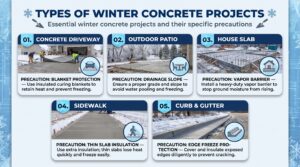
| Project | Main Winter Concern | Smart Precaution |
| Driveway | Large exposed surface cools fast | Frost free base, covers, mild day scheduling |
| Patio | Water pooling and finish quality | Proper slope and surface protection |
| Slab | Frozen ground underneath | Thaw the ground, gravel base, vapor barrier |
| Sidewalk | Thin sections lose heat quickly | Warmer mix and insulation |
| Curb and gutter | Edges cool first | Cover edges and avoid early deicers |
Preparing the Ground Before the Pour
The base decides how long concrete lasts, and winter makes preparation harder. Concrete should never be placed on frozen soil, snow or ice. Proper concrete slab installation starts with clearing the site, checking soil conditions and building a compacted base.
A good winter prep checklist includes:
- Remove snow, ice and standing water.
- Make sure the subgrade is not frozen.
- Compact a gravel base so the slab has even support.
- Install a vapor barrier where it is needed.
- Confirmed forms are set and drainage slopes away from the house.
At AMC Concrete, every pour uses a 3,500 PSI minimum mix with fiber reinforcement, a compacted gravel base and a vapor barrier. Structural slabs and garage floors also receive rebar on 18 inch centers.
How to Protect Fresh Concrete in Winter
Protection is what separates a strong winter slab from a damaged one. The NRMCA publishes cold-weather concreting recommendations in its Concrete in Practice series. Key ideas include placing concrete at the right temperature, using the lowest practical slump, protecting it from freezing or drying and limiting rapid temperature changes when covers come off.
For concrete pouring in winter in Columbia, TN, a smart protection plan usually includes:
- Ordering a mix suited to cold weather, with air entrainment when freeze and thaw exposure is expected
- Keeping the water content low, since extra water delays setting
- Covering the slab with insulated blankets or similar protection
- Giving extra attention to corners and edges, which lose heat first
- Avoiding water curing when freezing temperatures are close
- Removing covers gradually so the surface does not suffer thermal shock
Winter Concrete Pouring Precautions
Cold weather mistakes are easy to avoid when you know them. The Tennessee Concrete Association shares Tennessee concrete cold-weather guidance through its Concrete in Practice resource page, which gives local property owners a trusted place to learn more.
Precautions worth following:
- Never add jobsite water to make concrete easier to place.
- Vent any fuel burning heaters used in enclosed areas, since fumes can damage the surface.
- Keep deicing chemicals off new concrete.
- Wait before allowing heavy traffic or loads.
- Watch overnight lows for at least the first few days.
Thin pours need extra care. A new concrete sidewalk installation has less mass to hold heat, so insulation and timing matter even more.
Winter Patio Pouring
Patios are popular winter projects because homeowners plan outdoor living space ahead of spring. A well built concrete patio installation needs the same base preparation as a driveway, plus careful grading so water drains away from the house. Finish quality also depends on temperature. Cold air can delay finishing and curing, so the crew needs to watch the slab closely instead of rushing to a set schedule.
Difference Between Winter Pours and Warm Weather Pours
Knowing the difference helps you understand why a contractor may reschedule your project.
Winter pours
- Risk freezing and slow strength gain
- Need frost free ground and protective covers
- Set slowly, so finishing takes longer
- Call for careful curing and gradual cover removal
Warm weather pours
- Risk fast drying and surface cracking
- Need shade, moisture control and quick finishing
- Set quickly, so crews must work fast
- Call for protection from heat and wind
Neither season is easy. Each one needs a plan built for the weather on the day of the pour.
When It Is Smarter to Wait
A good contractor will tell you when to hold off. Consider postponing when:
- The ground is frozen or covered in snow
- A hard freeze is forecast right after the pour
- Heavy rain or ice is expected
- The base is too wet to compact properly
Waiting a few days often costs less than repairing a damaged slab later.
Frequently Asked Questions
Q: Can you do concrete pouring in winter in Columbia, TN?
A: Yes, you can pour concrete in winter if the crew plans for cold weather. Warm mix, frost free ground, and covers keep the slab from freezing while it gains strength. Crews still wait out hard freezes and heavy snow.
Q: How cold is too cold to pour concrete?
A: Cold weather rules apply when the daily average stays below 40 degrees for more than three days. Fresh concrete freezes near 25 degrees, which can cut its strength by more than half. Plan protection before the forecast drops.
Q: How long should new concrete stay covered in winter?
A: Cover it until it gains enough strength to resist freezing. That is usually about two days for early protection, but longer if water and freeze thaw cycles are expected. Your contractor sets the exact plan.
Q: What is the difference between winter and summer concrete pours?
A: Winter pours need frost free ground, warmer mix and slow, protected curing. Summer pours fight fast drying and heat. Both need good prep, but each weather needs a different plan to avoid cracks and weak surfaces.
Q: Does AMC Concrete pour driveways and patios during winter around Columbia?
A: AMC Concrete serves Columbia and nearby towns and plans each pour around the weather forecast. Call (931) 416-5131 to ask whether your driveway, patio or slab can be poured now and to get a free estimate.
Final Thoughts
Concrete pouring in winter in Columbia, TN works best when the plan matches the weather. Prepare the ground, protect the slab from early freezing, avoid shortcuts and wait when the forecast is against you. Done right, a winter pour can be just as strong and long lasting as one poured in spring.
AMC Concrete is a licensed, insured and BBB accredited Tennessee contractor (License number 82787). Every project includes a 3-year written workmanship warranty. If you are planning a driveway, patio, slab or sidewalk, you can request a free concrete estimate online or call us directly at (931) 416-5131.