A stained concrete patio is one of the easiest and most affordable ways to upgrade your outdoor living space. Whether you want a warm natural tone, a modern charcoal finish, or a decorative stone-like look, knowing how to stain a concrete patio can completely change the look of your backyard. Staining is durable, long-lasting, and perfect for homeowners who want style without the high cost of replacement.
Prefer to leave it to the pros? See our concrete patio designs and colored concrete services.
This guide walks you through how to stain a concrete patio, from the tools you need to color techniques and professional tips for an even, long-lasting finish.
Clean and repair the slab, mask nearby areas, test your color, apply 1 to 3 coats of stain with a pump sprayer, neutralize if you used acid stain, let the patio dry for about 24 hours, then seal it.
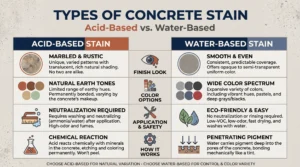
Types of Concrete Stain: Acid-Based vs Water-Based
Before you start, it helps to understand the two main types of concrete stain and how each one works. Stain soaks into the surface instead of sitting on top like paint, so it is far less likely to peel.
There are two main stain categories:
Acid-Based Stains
Acid stain reacts chemically with the minerals in the concrete, creating natural, marbled color variations. It is ideal for a rustic, stone-like look, but it must be neutralized and sealed afterward.
Water-Based Stains
Water-based stains are eco-friendly, low-odor, and provide even, consistent color across the patio. These work especially well for modern finishes.
To explore concrete finishing styles, view AMC Concrete’s Decorative Concrete gallery
| Feature | Acid-Based Stain | Water-Based Stain |
|---|---|---|
| Look | Natural, marbled, variegated tones | Even, consistent color |
| Color range | Mostly earth tones (browns, tans, terra cotta) | Wide range, including gray and charcoal |
| How it works | Reacts chemically with the concrete | Pigment soaks in and bonds to the surface |
| Neutralizing needed | Yes | No |
| Odor and safety | Stronger fumes, full protective gear | Low odor, easier cleanup |
| Best for | Rustic, stone-like patios | Modern finishes and even color |
| Sealer needed | Yes | Yes |
2. Tools & Materials You Will Need
If you plan to stain your patio yourself, gather these items:
-
Pressure washer or hose
-
Concrete cleaner/degreaser
-
Scrub brush
-
Painter’s tape & plastic sheets
-
Pump sprayer
-
Concrete stain (acid or water-based)
-
Safety mask, gloves, goggles
-
Concrete sealer (matte, satin, or gloss)
-
Paint roller or sprayer
- Neutralizer (for acid stain)
Professional contractors use commercial-grade sprayers and tools, which helps produce a more even finish.
For more product and safety information, the Concrete Network has a helpful guide to staining concrete.
3. Cleaning the Surface Properly
A clean surface is the foundation of a good stain job. Stain has to soak into the pores of the concrete, so dirt, oil, or old sealer will block it.
Cleaning process:
-
Sweep away debris
-
Remove leaves, dirt, and mildew
-
Scrub oil or grease spots thoroughly
-
Use concrete cleaner or degreaser
-
Pressure wash the patio and let it dry
Oil and grease spots need extra attention. Apply a concrete degreaser, scrub with a stiff brush, and rinse well. Repeat if the spot still repels water.
If your slab is badly cracked or damaged, contact AMC Concrete for an inspection before staining.
4. Repair Cracks or Damage
Whether your patio is new or old, make sure the surface is smooth and damage-free before you stain.
Repair:
-
Cracks
-
Holes
-
Chipped edges
-
Uneven spots
Patch with concrete filler and allow it to dry completely. Keep in mind that stain will not hide cracks or patches, and they often show through.
How to Stain a Concrete Patio: Step by Step
Follow these steps for an even, professional-looking finish:
Step 1: Mask Surrounding Areas
Protect walls, doors, railings, landscaping, and edges using plastic sheets and painter’s tape.
Step 2: Test Your Stain Color
Always test a small, hidden area before staining the full patio. Concrete absorbs stain differently from slab to slab, and the color often looks different once it dries. Testing matters most for stone-look finishes that use more than one color.
Step 3: Apply the First Coat
Use a pump sprayer:
-
Spray in even overlapping passes
-
Avoid puddles
-
Keep sprayer moving
-
Use a brush around edges
This method works for most exterior patios and stamped surfaces.
Step 4: Apply Additional Coats
For deeper color, add 1 to 2 more coats and let each coat reach the dry time on the label. On stamped concrete, apply stain lightly over high areas and darker in low areas to bring out the texture.
Step 5: Neutralize (Only for Acid Stains)
If you used an acid stain, you must neutralize the surface once the color has developed.
-
Apply a neutralizer (baking soda mixed with water works for many stains, so follow the product label)
-
Scrub gently
-
Rinse thoroughly
Skip this step for water-based stains.
Step 6: Let the Patio Dry Completely
Let the patio dry completely, usually at least 24 hours, before sealing. Follow the stain manufacturer’s instructions, since drying time affects color and clarity.
7. Seal the Concrete Patio
Sealing protects your stained patio from:
-
UV rays
-
Water absorption
-
Foot traffic
-
Weather damage
-
Color fading
Choose your finish:
-
Matte → natural look
-
Satin → soft sheen
-
Gloss → shiny wet look
Always seal a stained patio. Without a sealer, the color can wear and fade quickly.
Not sure when to reseal? Read our guide on how often to seal a concrete patio.
8. Fixing Mistakes: Removing Stains from Concrete
If the color turns out wrong, you have a few options.
Light surface stains:
-
Use degreaser
-
Scrub + rinse
Deep or unwanted stain color:
-
Apply chemical stain remover
-
Or lightly grind with a concrete grinder (advanced)
If you spill deck stain or another wood treatment on the patio:
-
Use paint & stain remover
-
Scrub with a stiff brush
-
Rinse thoroughly
If you want a brand-new look, AMC Concrete can help with patio resurfacing and decorative finishes. For more ideas, see our guide to the best concrete patio ideas.
9. Special Staining Techniques
Want more than a single flat color? These techniques add depth and variation:
-
Acid stain
-
Multiple colors
-
Sponge techniques
-
Layered spraying
How to Stain a Stamped Concrete Patio
Apply stain unevenly to highlight the texture. Use a lighter base color over the whole surface, then add a darker accent color in the low areas so the pattern looks more realistic.
How to Stain New Concrete Patio
Wait about 28 days for new concrete to cure before staining so the stain absorbs evenly.
Exterior Concrete Patio in Harsh Weather
In Middle Tennessee, spring and fall are usually the best times to stain, since temperatures are mild and rain is less likely to interrupt drying. Avoid staining in direct midday sun, in freezing temperatures, or when rain is in the forecast.
How to Stain a Concrete Patio to Look Like Stone
For a natural stone look, use two or three earth tones instead of one color. Start with a light base coat over the whole patio. While it is still wet, use a sponge or sprayer to dab a darker color in random patches, then blend the edges so the colors flow together. Add a small amount of a third color as an accent, let everything dry, and seal. Acid stains are popular for this look because they create natural, marbled variation, but water-based stains can work well too.
10. DIY vs. Professional Staining
You can stain a patio yourself, but the results depend heavily on technique and preparation.
DIY Pros
-
Lower cost
-
Personal satisfaction
DIY Cons
-
Uneven color risk
-
Blotching
-
Permanent mistakes
-
Messy neutralizing & sealing process
Hiring AMC Concrete gives you:
-
Professional-grade stain penetration
-
Even color blending
-
High-quality sealing
-
Longer lifespan
-
Decorative design options
Explore AMC Concrete’s full list of concrete services
Frequently Asked Questions
Q: Can you stain an old concrete patio?
A: Yes, as long as the surface is clean, in good condition, and free of old sealer or paint. Any coating must be removed first so the stain can soak in.
Q: How long does concrete stain last?
A: It depends on the stain type, sun exposure, foot traffic, and the sealer. With proper sealing and periodic resealing, a stained patio can last many years.
Q: Which is better for a patio, acid or water-based stain?
A: Acid stain gives a natural, marbled, stone-like look. Water-based stain gives more even color and a wider color range, with easier application.
Q: Do you need to seal a stained concrete patio?
A: Yes. A sealer protects the color from UV rays, moisture, and wear.
Q: Can you restain a concrete patio?
A: Yes. Remove the old sealer first. Keep in mind that a lighter stain will not cover a darker one, so plan to go darker or match the existing color.
Q: How much does it cost to stain a concrete patio?
A: The cost depends on the size of the patio, its condition, the type of stain, and how much prep and repair work is needed. For an exact price, contact AMC Concrete for a free estimate.
Q: What is the best time of year to stain a concrete patio in Tennessee?
A: Spring and fall are usually best, since temperatures are mild and rain is less likely to interrupt drying. Avoid staining in freezing temperatures, in direct midday sun, or when rain is in the forecast.
Final Thoughts
Staining is one of the most affordable ways to turn a plain gray slab into a stylish, long-lasting outdoor space. With careful prep, the right stain, and a quality sealer, you can create anything from a natural stone look to a clean, modern finish. If you would rather skip the guesswork, AMC Concrete is here to help. We are a licensed Tennessee general contractor (License #82797) serving Columbia and Middle Tennessee, and we handle patio staining, decorative concrete, resurfacing, and sealing. Call 931-416-5131 or request a free estimate today.