Knowing how often to seal concrete patio surfaces is one of the easiest ways to protect your backyard investment across Tennessee. At AMC Concrete, we see the same pattern on patios from Columbia to Franklin. Owners skip sealing for a few years, and then stains, flaking, and hairline cracks start to show. The short answer is that most patios need a fresh coat of sealer every two to three years, though the exact timing depends on the sealer type, sun exposure, foot traffic, and our humid summers and freezing winters.
A patio looks solid, but concrete is porous. Water, oil, leaf stains, grill grease, and winter salt can soak in and slowly weaken the surface from the inside. If you are planning a new concrete patio installation, plan the sealing schedule from day one, because the first coat sets the rhythm for every coat after it. If your patio is already in place, this guide shows you how to read the warning signs and choose the right timing.
Key Takeaways
- Most sealed patios do well with a fresh coat every two to three years.
- New concrete should cure for about 28 days before the first coat goes on.
- Stamped and colored patios often need sealing more often because the sealer protects the pattern and the color.
- A simple water test each spring tells you if your sealer is still working.
- Always follow the product label, since every sealer has its own recoat guidance.
How Often to Seal Concrete Patio Surfaces in Tennessee
Homeowners ask us how often to seal concrete patio surfaces more than almost any other maintenance question, and the honest answer is that it depends. A good starting point is every two to three years for a typical outdoor patio. A shaded patio with light use may stretch longer. A sunny patio near a pool, a grill area, or a busy walkway may need attention sooner.
Tennessee weather adds pressure. Our summers are hot and humid, our springs bring heavy rain, and our winters swing above and below freezing. When water enters unsealed concrete and then freezes, it expands and can cause flaking and cracks. That repeated cycle is known as freeze thaw damage, and it is one of the main reasons outdoor concrete wears out early. Sealing slows water down and gives the surface a protective layer.
The table below shows general timing by sealer type. These are typical industry ranges, not guarantees, so always check the label on your product.
| Sealer Type | Typical Reseal Timing | Finish | Best For |
| Acrylic film forming | Every 1 to 3 years | Natural to glossy | Standard patios and color enhancement |
| Penetrating silane or siloxane | Often 5 years or more | Natural, no shine | Brushed concrete in freeze thaw areas |
| Polyurethane | Every 3 to 5 years | Satin to glossy | Patios with heavy wear |
If you are unsure which row fits your patio, a quick look from a contractor can save you money. Our team can match the sealer to your surface and your goals, so ask about concrete sealing services when you call.
Signs Your Patio Is Ready for a New Coat
Do not rely on the calendar alone. Your patio will tell you when it needs help. Watch for these signs:
- Water soaks in and darkens the concrete instead of beading on top.
- The color looks dull, faded, or patchy.
- Oil, grease, or leaf stains no longer wipe away easily.
- The surface feels dusty or rough under your hand.
- Tiny flakes or a chalky powder appear on the surface.
- Moss or algae returns quickly after cleaning.
Try the water test. Sprinkle a cup of water on the patio. If it beads up, your sealer is still protecting the slab. If the water spreads out and the concrete darkens within a few minutes, it is time to plan a new coat.
Difference Between Penetrating and Film Forming Sealers
These two sealer types protect concrete in different ways, and the choice affects how often you will reseal.
- Penetrating sealers soak into the pores and block water from inside the surface. They leave a natural look, add no shine, and usually last longer.
- Film forming sealers sit on top as a thin coating. They can deepen color and add a sheen, but they wear faster from sun and foot traffic, so they need recoating more often.
- Maintenance: Penetrating sealers rarely need stripping. Film forming sealers may need cleaning or light prep before each new coat.
- Slip risk: Glossy coatings can feel slick when wet, so ask about a grip additive for steps and pool areas.
Stamped and Decorative Patios Need Extra Care
Stamped patios carry texture, pattern, and color, and the sealer is what keeps those details looking sharp. Many stamped surfaces use a film forming sealer, which is why they often need a refresh every two to three years. If you love the look of stone, slate, or brick at a fraction of the cost, stamped concrete patios are a great choice, but sealing is part of the deal. Skipping it can leave the color faded and the pattern worn long before its time.
What Changes Your Sealing Schedule
Two patios in the same neighborhood can need very different care. These factors move your timeline up or down:
- Sun exposure: Strong sunlight breaks down film forming sealers faster.
- Tree cover: Falling leaves, sap, and damp shade encourage stains and algae.
- Foot traffic and furniture: Heavy use and dragged chairs scuff the coating.
- Pools, hot tubs, and grills: Splashing water, chemicals, and grease raise the wear.
- Winter products: Rock salt and ice melt products can stress the surface, especially on young concrete.
- Pressure washing: Strong washing can strip sealer, so use moderate pressure.
How to Seal a Concrete Patio Step by Step
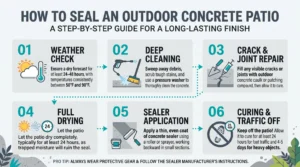
Here is the basic process we follow. It works for most outdoor patios.
- Check the forecast. Pick a dry day with mild temperatures, and avoid sealing right before rain. The label lists the safe temperature range.
- Clean the patio well. Remove dirt, oil, mildew, and old flaking sealer.
- Fix problems first. Fill small cracks and repair chips before sealing. For wider or growing cracks, learn more about concrete crack repair and when replacement makes more sense.
- Let the slab dry fully. Most products need a dry surface, often one to two days after washing.
- Apply thin, even coats. Use a roller or low pressure sprayer and avoid puddles, because thick coats can turn cloudy or peel.
- Keep traffic off. Allow the full dry time on the label before furniture and foot traffic return.
Before you buy, read the label for VOCs, short for volatile organic compounds. EPA guidance on VOCs explains why you should work with plenty of fresh air and follow safety directions closely. Some areas also limit VOC levels in coatings, so check your local rules.
Common Sealing Mistakes to Avoid
- Sealing new concrete too early, before it has cured.
- Sealing damp concrete, which can trap moisture and leave white or cloudy patches.
- Rolling on thick coats instead of thin ones.
- Choosing the wrong sealer for the surface or the climate.
- Skipping the cleaning step.
- Letting the schedule slip until stains and flaking have already set in.
Protect Your Patio Through Tennessee Seasons
Sealing is one part of a bigger care plan. The American Cement Association shares resources on concrete durability, and the American Concrete Institute offers technical answers on surface protection from freezing and thawing. Research shared through Iowa State University also explains how weather damage such as scaling shows up on outdoor slabs and how to lower the risk.
A few simple habits help between coats:
- Sweep leaves and debris often so stains do not set.
- Keep gutters and downspouts pointed away from the patio.
- Rinse off winter salt and ice melt residue when the weather warms.
- Wipe up oil and grease spills right away.
- Reseal in late spring or early fall when the weather is dry and mild.
A well built patio can last for decades with the right care. You can read more about how long a concrete patio lasts and what helps it last longer. Sealing every two to three years is a smart rhythm for most owners, which is why how often to seal concrete patio surfaces belongs on your yearly home checklist.
Should You Seal It Yourself or Hire a Pro?
Many homeowners can roll on a sealer over a weekend. Still, prep work decides how well the sealer performs. Cleaning, crack filling, and picking the right product take experience, and mistakes can cost more than the sealer itself.
AMC Concrete has served Middle Tennessee for over 20 years. We hold contractor license 82787, we are a BBB accredited business, and we back new installations with a 3 year written workmanship warranty. Our veteran owned team is based in Columbia, and we serve Franklin, Spring Hill, Brentwood, and nearby communities.
Ready for a clear answer on your patio? Request a free estimate or call (931) 416-5131. Our team usually responds within 24 hours, and we are happy to explain how often to seal concrete patio surfaces for your exact slab, sun, and soil.
Frequently Asked Questions
Q: How often to seal concrete patio surfaces in Tennessee if they get lots of sun and rain?
A: Most patios need a new coat every two to three years. Sun, rain, and freezes wear sealer faster, so run a water test each spring and reseal when water stops beading. Call AMC Concrete for patio help today.
Q: Is it worth paying a contractor to seal my patio instead of doing it myself?
A: It can be. A pro cleans the slab, fixes cracks, and matches the sealer to your surface. DIY works for simple jobs, but poor prep or thick coats cause peeling. AMC Concrete can help you with the whole job.
Q: What is the best time of year to seal a patio in Tennessee?
A: Late spring and early fall work well. Pick a dry stretch with mild temperatures and check the label for the safe range. Skip rain and freezing nights. AMC Concrete can help you plan the best timing for your patio.
Q: Should I choose a penetrating sealer or an acrylic sealer for my patio?
A: Penetrating sealers keep a natural look and often last longer. Acrylic sealers add shine but wear faster. Choose by the look and upkeep you want. AMC Concrete can match a sealer to your patio and your budget.
Q: Can I put new sealer over old sealer on my patio?
A: Sometimes. If the old coat is sound and compatible, clean it and apply a thin coat. If it is peeling, cloudy, or unknown, strip it first so it bonds. AMC Concrete can check your slab and advise you today.
Final Thoughts
Sealing your patio on time is a small job that prevents big repairs later. Check your sealer every spring, reseal when the water test fails, and match the product to your surface. If you want expert help, AMC Concrete is ready to inspect your patio and recommend the right plan. Call us today at (931) 416-5131 and protect your outdoor space for years to come.