If you are researching concrete driveway cost Columbia TN, the final price depends mainly on size, thickness, base work, access, finish and extra work, and a free on-site estimate gives the most accurate number. AMC Concrete serves Columbia, TN and Maury County with clear, written estimates for homes and businesses. This guide explains the seven factors in plain language.
Quick Answer: The cost of a concrete driveway in Columbia, TN depends on size, thickness, base work, access, finish, removal, and drainage. No single number fits every home because each lot is different. A free on-site estimate gives the most accurate number, so ask a local contractor to visit your site and list each factor in writing.
How much does a concrete driveway cost in Columbia, TN?
The cost of a concrete driveway in Columbia depends mainly on size, thickness, base work, access, finish, removal, and drainage. No single number fits every home because each lot is different. In addition, a free on-site estimate gives the most accurate number for your address. Therefore, use the seven factors below to understand your quote.
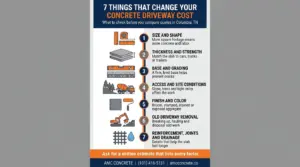
When you compare concrete driveway cost Columbia TN, start with square footage because size sets the base amount of concrete, labor, and base material. A clear estimate should list each factor in plain language, so you can see what drives the total. For example, a larger driveway needs more concrete and more base work, however a simple shape can keep forming and finishing simpler. As a result, the seven factors below give you a fair way to compare quotes.
A concrete driveway installation starts with a site visit and a clear plan. The crew measures the area, checks access, and notes slope, trees, and drainage. In addition, the crew discusses finish, thickness, and removal needs with the owner. Therefore, the estimate reflects your lot, not a generic number.
1. Driveway Size and Shape
Driveway size and shape set the base for most of the work. A larger driveway needs more concrete, more base material, and more labor. In addition, a long or curved shape can add cutting, forming, and finishing time. As a result, owners should measure length and width and think about parking needs before they ask for an estimate.
Square footage is simple to understand. Multiply length times width to find the area. For example, 20 ft by 20 ft equals 400 square feet. A longer driveway or a wider parking area adds square footage, and that adds concrete and labor. In addition, a curved edge or a turn area can add forming work. Therefore, a clear shape helps the crew plan an accurate estimate.
Shape also affects access and finishing. A straight driveway often allows faster forming and pouring, however a curved driveway can look better and fit a lot with trees or slopes. Meanwhile, owners should think about how many cars need to park and how trucks turn. As a result, the right size and shape balance daily use with a clean and simple build.
2. Concrete Thickness and Strength
Concrete thickness and strength affect how well a driveway holds cars and trucks over time. A thicker slab often handles heavy loads better, however it also needs more concrete and more work. In addition, the mix strength should match the use of the driveway. Therefore, owners should ask what thickness and mix the contractor plans to use.
Concrete driveway thickness is a key choice for a new concrete driveway. A driveway that holds only cars has different needs than a driveway that holds heavy trucks or trailers. For example, a thicker slab can spread weight better and resist cracks from heavy loads. In addition, the crew should compact the base well so the slab stays even. As a result, thickness and base work together to support the driveway.
Strength also comes from the mix and the cure. A good mix should suit Middle Tennessee weather and the loads on the driveway. Meanwhile, proper curing helps the concrete gain strength and resist surface wear. Therefore, owners should ask the contractor to explain the planned thickness, mix, and curing steps in the written estimate.
3. Base Preparation and Grading
Base preparation and grading shape the support under the concrete. A firm and level base helps the slab stay even and drain well. In addition, poor base work can lead to cracks and settling. As a result, crews should remove soft soil, add a solid base layer, and grade the site for water flow.
Base preparation starts with a clear and firm subgrade. Crews remove topsoil, roots, and soft spots, then add and compact a base layer. For example, a well compacted base helps the slab resist settling when cars drive over it each day. In addition, proper grading moves water away from the house and the driveway. As a result, the driveway stays drier and lasts longer.
Grading also protects nearby areas. A driveway should slope gently away from the garage and the house, so water does not pool near the foundation. Meanwhile, crews should plan for rain flow across the lot. Therefore, a careful base and grade plan is one of the most important parts of a concrete driveway installation in Columbia, TN.
4. Access and Site Conditions
Access and site conditions change how fast a crew can work. A steep slope, tight entry, trees, or a long distance from the street can slow trucks and equipment. In addition, soft ground can limit where trucks can drive. Therefore, the crew should visit the site and plan access before they set the schedule.
A driveway contractor in Columbia TN should check the full route from the street to the work area. A narrow gate or a tight turn can limit truck size, and a steep slope can make pouring harder. For example, crews may need smaller loads or extra labor when access is tight. In addition, trees, fences, and power lines can limit equipment movement. As a result, a site visit helps the crew plan a safe and efficient pour.
Distance from the street also matters. A long driveway needs more time to move concrete and finish the surface. Meanwhile, soft or wet ground can force the crew to use mats or change the plan. Therefore, owners should point out slopes, low spots, and buried lines during the estimate visit, so the crew can plan with facts.
5. Finish and Color
Finish and color change both the look and the work needed for a driveway. A simple broom finish often suits most homes, however stamped, stained, or exposed aggregate finishes need more time and skill. In addition, color and texture can affect slip resistance and care. As a result, owners should compare samples before they choose.
A broom finish gives a clean and slip resistant surface that suits most driveways in Maury County. Crews brush the fresh concrete to create fine lines that help tires grip. For example, a broom finish works well for a family driveway that sees daily cars and foot traffic. In addition, it is simple to maintain and easy to match later. As a result, many owners choose this finish for a clean and practical look.
Stamped or broom finish concrete can also add style. Stamped concrete can mimic stone or brick patterns, while stain can add color and depth. Exposed aggregate shows small stones in the surface for texture. However, these finishes need more time, skill, and care during the pour. Therefore, owners should ask the contractor to explain the finish steps and the care needed after the pour.
6. Removal of an Old Driveway
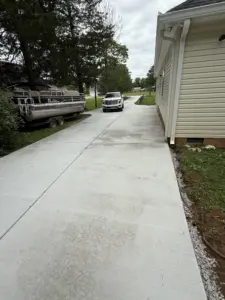
Removal of an old driveway adds labor, hauling, and disposal work before new concrete can go down. Crews must break up the old slab, load the pieces, and clear the site. In addition, they must check the base under the old driveway. Therefore, owners should ask if removal is included in the written estimate.
Driveway removal and replacement is common in Columbia, TN, where owners replace cracked or settled driveways. Crews use equipment to break the old slab into pieces, then load and haul the debris away. For example, a thick old slab or a slab with deep roots under it can take more time to remove. In addition, the crew should inspect the base after removal to see if it needs repair. As a result, removal work can change the total scope.
Owners should also ask about site cleanup after removal. A good crew clears debris, protects nearby lawns and driveways, and leaves the site ready for base work. Meanwhile, the crew should confirm where debris goes and what is included in the price. Therefore, a clear written estimate should list removal, hauling, and disposal as separate items, so owners can compare quotes fairly.
7. Reinforcement, Control Joints and Drainage
Reinforcement, control joints, and drainage help a driveway last longer and crack less. Steel or fiber reinforcement can add strength, and control joints give concrete a planned place to crack. In addition, good drainage moves water away from the slab. As a result, these details protect the driveway through rain and cold snaps.
Reinforcement can include steel mesh, rebar, or fiber in the mix. These materials help hold the slab together when loads and temperature changes stress the concrete. For example, a driveway that holds heavy vehicles may need stronger reinforcement than a light use driveway. In addition, the crew should place reinforcement correctly and keep it in the middle of the slab. As a result, the slab gains strength where it needs it most.
Control joints and drainage work together to manage cracks and water. Control joints are shallow cuts that guide cracks to planned lines, so the surface looks cleaner. Drainage moves water away from the slab and the house, which helps prevent erosion and settling. Owners can learn more from EPA guidance on drainage and permeable pavement. Therefore, owners should ask how the contractor plans joints and drainage for their lot.
How Does Weather Affect Concrete Curing in Middle Tennessee?
Weather in Middle Tennessee can affect concrete curing in clear ways. Cold snaps can slow curing, rain can damage a fresh surface, and summer heat can dry concrete too fast. In addition, wind can dry the surface and cause cracks. Therefore, crews should check the forecast and plan pour times with care.
Cold weather needs special care. A cold snap can slow the cure and make the surface weaker if the crew does not protect it. For example, crews may cover fresh concrete or choose a warmer part of the day for the pour. In addition, they should avoid pouring on frozen ground. As a result, a careful winter plan helps the driveway cure well.
Rain and summer heat also need planning. Rain can wash the surface and weaken the finish, while summer heat can dry the top too fast and cause cracks. Meanwhile, crews should check the National Weather Service Nashville forecast before they schedule a pour. Therefore, a good crew plans around weather and protects the fresh concrete until it sets.
Do You Need a Permit for a Concrete Driveway in Columbia, TN?
Permits and local rules for a concrete driveway can vary by city and county. Owners in Columbia and Maury County should confirm requirements with local authorities before work starts. In addition, they should keep written approvals on site. Therefore, early checks help owners avoid delays and start work with confidence.
Owners should not guess about local rules. A driveway may need approval when it changes access to the street, adds a new curb cut, or affects drainage. For example, the city or county may ask for a simple review of the plan and the site. In addition, owners should allow time for review before they set a pour date. As a result, the project starts with clear approval.
A local contractor can help owners know what questions to ask. Owners can also learn more from the Tennessee Board for Licensing Contractors for general information about contractors in Tennessee. Meanwhile, owners should keep copies of approvals and utility confirmations. Therefore, the project stays organized and ready for work.
How Should You Compare Driveway Quotes?
A good written estimate should list size, thickness, base work, finish, removal, and drainage in clear language. Owners should compare the same scope across quotes, not just the bottom line. In addition, they should ask what is included and what is extra. As a result, a clear estimate helps owners spot missing work before they hire.
A concrete driveway estimate should show the full scope in plain language. First, check that each quote lists the same size, thickness, and finish. Next, check base work, removal, and drainage. Finally, check cleanup, curing time, and when you can drive on the new surface. For example, one quote may look lower because it leaves out removal or base work. In addition, a clear quote should list the payment terms and the schedule. Therefore, owners should compare line by line, not just the total.
Owners should also ask how the contractor handles changes. A good contractor explains what happens if the crew finds soft soil or a buried line. Meanwhile, owners should keep all quotes in writing and ask questions before they sign. If you want a clear quote for your lot, contact us for a free estimate and ask for a written list of each factor.
Get a Free Patio With Your New Concrete Driveway
AMC Concrete currently offers a free patio when a customer installs a concrete driveway in Columbia, TN. Terms apply, so call for details. Pouring a driveway and patio together can be convenient because one crew handles both areas on one schedule. In addition, the finish can match across both spaces, and the site stays cleaner with one project instead of two separate visits. As a result, owners can enjoy a new driveway and a new concrete patio without extra trips. Call (931) 416-5131 to ask about the offer and book a free estimate.
What Questions Should You Ask a Driveway Contractor Before You Hire?
Good questions help owners hire with confidence and avoid surprises. Owners should ask about thickness, base work, finish, curing time, and cleanup. In addition, they should ask who handles permits and debris. As a result, clear answers show if the contractor plans the job with care and clear communication.
Owners should ask direct questions and listen for clear answers. For example, ask what thickness the crew plans to use and how they will prepare the base. Next, ask how they will handle drainage and control joints. Finally, ask when you can walk and drive on the new concrete. In addition, ask who will clean the site and what happens if weather delays the pour. Therefore, good questions help you compare contractors fairly.
- What thickness and mix will you use for my driveway?
- How will you prepare the base and handle grading?
- What finish do you recommend, and why?
- How will you handle drainage and control joints?
- What is included in the written estimate, and what is extra?
- When can I walk and drive on the new concrete?
Concrete vs Other Driveway Materials: Which Is Right for You?
Concrete, asphalt, gravel, and pavers each suit different needs and budgets. Concrete often offers a firm and long lasting surface, however asphalt can feel softer and gravel can cost less to install. In addition, pavers can offer a distinct look with more joints. Therefore, owners should compare care, look, and use before they choose.
Concrete often suits owners who want a firm, clean, and long lasting driveway in Middle Tennessee. It can handle cars and light trucks well, and it offers many finish choices. Asphalt can suit owners who want a dark surface that flexes with temperature changes, however it may need more frequent care. Gravel can suit a rural lot or a low use drive, however it can shift and need more raking. Pavers can suit a distinct look, however they need careful base work and joint care.
Owners should think about daily use, look, and care. For example, a family with daily cars may prefer concrete for a firm surface. In addition, a lot with a steep slope may need a surface with good grip. As a result, the best material depends on your lot, your budget, and how you use the driveway each day.
Checklist: Prepare Your Property Before the Crew Arrives
Owners can prepare a property before the crew arrives with a few simple steps. Clear access, move cars and items, and confirm the work area. In addition, tell the crew about buried lines and nearby structures. As a result, the crew can start fast, work safely, and avoid surprises on the first day.
A short checklist helps owners get ready without stress. First, walk the lot and note gates, driveways, and low branches. Next, move cars, trash bins, and toys away from the work area. Finally, confirm that the crew has clear access to water and power if needed. Meanwhile, keep pets and children away from the work area for safety.
- Clear the driveway, gates, and truck access routes.
- Move cars, bins, and personal items away from the work area.
- Mark sprinkler heads, buried lines, and septic areas.
- Tell the crew about slopes, low spots, and nearby trees.
- Keep a clear path for workers and a safe place to park.
- Confirm the pour date and the plan for curing time.
Why Hire a Local Concrete Contractor in Columbia, TN?
A local concrete contractor in Columbia, TN understands Middle Tennessee weather, soil, and site access. Local crews know how Maury County lots respond to rain, frost, and heat. In addition, they can visit fast and adjust plans to local conditions. Therefore, local knowledge helps owners avoid delays and get a driveway that fits the site.
AMC Concrete is a concrete driveway contractor in Columbia, TN for homes and businesses across Maury County and Middle Tennessee. Local crews know the roads, the lots, and the weather patterns that affect each site. For example, they can spot a shaded slope that holds water, a low yard that floods, or a tight drive that needs a smaller truck. In addition, they can meet owners on site, answer questions, and set a clear plan. As a result, owners get honest guidance and steady communication.
A Maury County concrete contractor can also plan work hours, truck routes, and cleanup with the neighborhood in mind. Meanwhile, crews can respond fast when weather shifts or a site needs a quick check. Therefore, local service means faster answers and a smoother project from start to finish.
In Short
In short, concrete driveway cost Columbia TN depends on size, thickness, base work, access, finish, removal, and drainage, and a free on-site estimate gives the clearest answer for your home in Columbia, TN and Maury County.
Frequently Asked Questions
How thick should a concrete driveway be?
It depends on use, soil, and loads. A driveway for cars often needs a standard thickness, while a driveway for heavy trucks may need a thicker slab. In addition, base preparation matters as much as thickness. Ask your contractor what thickness and mix they plan to use for your lot, and why that choice fits your daily use.
Why are driveway quotes so different from each contractor?
Quotes differ because scope differs. One quote may include base work, removal, and drainage, while another may leave those items out. In addition, thickness, finish, and access can change the work. Compare each written estimate line by line, and ask what is included and what is extra before you choose.
How long does a concrete driveway last?
It depends on base work, thickness, drainage, use, and care. A well built driveway with a firm base, good joints, and proper drainage can last many years. However, heavy loads, poor drainage, and freeze and thaw cycles can shorten its life. Follow your contractor care advice and fix small cracks early.
Is concrete cheaper than asphalt for a driveway?
It depends on the project, the site, and the scope. Concrete can cost more to install in some cases, however it can need less frequent resurfacing than asphalt. Asphalt can cost less to install, however it may need more care over time. Ask for written estimates for each material and compare the full scope.
How long before I can drive on a new concrete driveway?
It depends on the mix, thickness, and weather. Crews often ask owners to wait for curing before they drive heavy vehicles on the surface. In addition, cold or wet weather can slow curing. Follow the timeline your contractor gives you in writing, and avoid heavy loads until the crew confirms it is ready.
Do I need to remove my old driveway before pouring new concrete?
In most cases, yes, crews should remove the old driveway before they pour new concrete. The old slab can hide base problems, cracks, and uneven spots. In addition, removal lets the crew check and repair the base. Ask if removal, hauling, and disposal are included in your written estimate.
Ready to Get a Clear Estimate Without Surprises?
Do not let surprise costs and unclear quotes stall your driveway project. A new concrete driveway with AMC Concrete currently comes with a free patio, terms apply. Call AMC Concrete at (931) 416-5131 for a free estimate in Columbia, TN, and ask about the free patio offer.