If you are researching stamped patio cost Middle Tennessee, the final price depends mainly on patio size, stamp pattern, color, base preparation, site access and sealing, and a free on-site estimate gives the most accurate number. AMC Concrete serves Columbia, TN and Maury County with clear, written estimates for patios and driveways. This guide explains what drives the price in plain language.
Quick Answer: The cost of a stamped concrete patio in Middle Tennessee depends on size, pattern, color, base work, access, and sealing. No single number fits every yard because each site is different. A free on-site estimate gives the most accurate number, so ask a local contractor to visit and list each factor in writing.
How Much Does a Stamped Concrete Patio Cost in Middle Tennessee?
The cost of a stamped concrete patio in Middle Tennessee depends mainly on size, pattern, color, base work, access, and sealing. No single number fits every yard because each lot is different. In addition, a free on-site estimate gives the most accurate number for your home. Therefore, use the factors below to understand your quote.
When you compare stamped patio cost Middle Tennessee, start with size and pattern because those two choices set much of the work. A clear estimate should list each factor in plain language, so you can see what drives the total. For example, a larger patio needs more concrete and labor, however a detailed pattern can add more time and skill. As a result, the factors below give you a fair way to compare quotes.
A stamped concrete patio in Columbia TN can transform a plain yard into a clear outdoor living space. The crew pours concrete as one surface, then stamps a pattern and adds color. In addition, the crew seals the surface to protect color and texture. Therefore, the final look depends on pattern, color, and skilled work.
What Affects Stamped Patio Cost in Middle Tennessee?
Many factors affect the price of a stamped patio, and size and pattern often matter most. A larger patio needs more concrete and labor, while a detailed pattern needs more time and skill. In addition, base work, color, access, removal, drainage, and sealing can change the total. As a result, a clear estimate should list each factor.
The sections below explain each factor in plain language. First, think about size and shape. Next, think about thickness and base work. Finally, think about pattern, color, access, removal, drainage, and sealing. Meanwhile, keep notes on your lot and your style goals, so you can share them during the estimate visit.
Patio Size and Shape
Patio size and shape set the base for most of the work. A larger patio needs more concrete, more base material, and more labor. In addition, a curved or irregular shape can add forming and finishing time. As a result, owners should measure length and width and think about seating and walkways before they ask for an estimate.
Square footage is simple to understand. Multiply length times width to find the area. For example, 12 ft by 15 ft equals 180 square feet. A larger patio adds square footage, and that adds concrete and labor. In addition, a shape with curves or steps can add forming work. Therefore, a clear shape helps the crew plan an accurate estimate.
Concrete Thickness
Concrete thickness affects how well a patio holds furniture, foot traffic, and weather over time. A thicker slab often handles loads better, however it also needs more concrete and more work. In addition, the mix should match the use of the patio. Therefore, owners should ask what thickness the contractor plans to use.
A patio that holds only chairs and a table has different needs than a patio that holds a heavy grill or hot tub. For example, a thicker slab can spread weight better and resist cracks. In addition, the crew should compact the base well so the slab stays even. As a result, thickness and base work together to support the patio.
Base Preparation and Grading
Base preparation and grading shape the support under the concrete. A firm and level base helps the slab stay even and drain well. In addition, poor base work can lead to cracks and settling. As a result, crews should remove soft soil, add a solid base layer, and grade the site for water flow.
Base work starts with a clear and firm subgrade. Crews remove topsoil, roots, and soft spots, then add and compact a base layer. For example, a well compacted base helps the slab resist settling when people walk on it each day. In addition, proper grading moves water away from the house and the patio. Therefore, a careful base plan is a key part of a lasting patio.
Stamp Pattern and Detail Level
Stamp pattern and detail level change both the look and the work needed for a patio. A simple pattern often takes less time, however a detailed stone or wood pattern needs more skill and care. In addition, borders and accent bands can add time. As a result, owners should compare pattern samples before they choose.
Patterns can mimic stone, brick, slate, or wood. A simple ashlar pattern can look clean and classic, while a detailed flagstone pattern can look more natural. For example, the crew must place stamps in order and keep joints aligned. In addition, the crew must work fast before the concrete sets. Therefore, pattern choice affects labor and timing.
Color and Accent Options
Color and accent options add depth and style to a stamped patio. A base color sets the main tone, while an accent color can highlight texture and joints. In addition, color choices can affect how the patio looks in sun and shade. As a result, owners should view samples in daylight before they decide.
Color can come from integral color in the mix, surface color, or a release agent that adds contrast. For example, a warm brown base with a darker accent can look like natural stone. In addition, the crew should apply color evenly and seal the surface to protect it. Therefore, color planning is part of the written estimate.
Site Access and Slope
Site access and slope change how fast a crew can work. A steep slope, tight gate, trees, or a long distance from the street can slow trucks and equipment. In addition, soft ground can limit where trucks can drive. Therefore, the crew should visit the site and plan access before they set the schedule.
A patio contractor in Columbia TN should check the full route from the street to the backyard. A narrow gate can limit equipment size, and a steep slope can make pouring harder. For example, crews may need smaller loads or extra labor when access is tight. In addition, trees, fences, and power lines can limit movement. As a result, a site visit helps the crew plan a safe pour.
Removal of an Old Patio or Slab
Removal of an old patio or slab adds labor, hauling, and disposal work before new concrete can go down. Crews must break up the old slab, load the pieces, and clear the site. In addition, they must check the base under the old slab. Therefore, owners should ask if removal is included in the written estimate.
An old concrete patio, brick patio, or wood deck may need full removal before a new pour. Crews use equipment to break the old surface into pieces, then load and haul the debris away. For example, a thick old slab can take more time to remove than a thin slab. In addition, the crew should inspect the base after removal. As a result, removal work can change the total scope.
Drainage
Drainage moves water away from the patio and the house, which helps prevent erosion and settling. A patio should slope gently away from the house, so water does not pool near the foundation. In addition, the crew should plan for rain flow across the yard. As a result, good drainage protects the patio and the home.
Owners can learn more from EPA guidance on drainage and permeable pavement. This source explains how water moves across paved surfaces. A local crew can plan joints, slopes, and drains to fit the lot. Therefore, owners should ask how the contractor plans drainage for their yard in Columbia, TN.
Sealing
Sealing helps protect a stamped patio from water, stains, and wear. A sealer can also deepen color and add a light sheen. In addition, sealing helps the surface resist freeze and thaw damage. As a result, owners should ask if sealing is included in the estimate and how to care for the seal over time.
Sealing is part of patio care, not a one time step. Resealing is needed over time as the seal wears from sun, rain, and foot traffic. For example, the crew may seal the patio after it cures and explain simple cleaning steps. In addition, owners should avoid harsh cleaners that can damage the seal. Therefore, a clear sealing plan helps the patio keep its color and texture.
Stamped Concrete vs Pavers: Which Is Better for Your Patio?
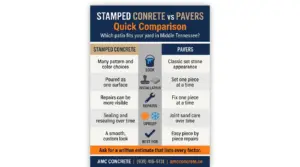
Stamped concrete and pavers both provide a decorative look, however they differ in how crews build and repair them. Stamped concrete is poured as one surface with many pattern and color choices. Pavers are set one piece at a time and can be repaired one piece at a time. Therefore, the best choice depends on look and upkeep.
Stamped concrete provides one poured surface with no joints between pieces. The crew can create stone, brick, or wood looks with stamps and color. In addition, the surface feels smooth under chairs and tables. As a result, many owners choose stamped concrete for a clean and custom look in Maury County.
Pavers provide a different style. Each paver is set by hand, and the crew can lift and replace one paver if it cracks or settles. For example, a damaged paver can be swapped without redoing the whole patio. In addition, pavers can shift over time and need joint sand care. Therefore, owners should compare look, repair style, and upkeep before they choose.
Stamped Concrete vs Plain Broom Finish Concrete
Stamped concrete and plain broom finish concrete both use poured concrete, however they look and feel very different. Stamped concrete adds pattern and color for a decorative look. Broom finish concrete provides a simple and slip resistant surface. As a result, owners should choose based on style, use, and upkeep.
A broom finish patio suits owners who want a simple and practical surface. Crews brush the fresh concrete to create fine lines that help shoes grip. For example, a broom finish works well for a family patio that sees daily foot traffic. In addition, it is simple to maintain and easy to match later.
A stamped patio suits owners who want a custom outdoor living space. The pattern and color can match the home and the yard. However, stamped work needs more skill, more time, and sealing care. Therefore, owners should weigh style against care needs before they decide.
How Do You Maintain and Seal a Stamped Concrete Patio?
Stamped concrete needs regular care to keep its color and surface looking fresh. Sealing helps protect the surface from water, stains, and wear. In addition, resealing is needed over time as the seal wears. As a result, owners should plan for simple cleaning and resealing as part of patio care.
Simple cleaning helps a stamped patio last. Owners should sweep leaves and dirt often, and wash the surface with mild soap and water when needed. For example, a soft brush can remove dirt from texture without harming the seal. In addition, owners should avoid harsh chemicals and metal tools that can scratch the surface. As a result, the patio stays cleaner with less effort.
Sealing needs a plan. A new patio should cure before sealing, and the crew should explain the timing. Meanwhile, owners should watch for fading color or water that soaks in fast, which can signal that resealing is due. Therefore, a local contractor can advise on cleaning and resealing for Middle Tennessee weather.
How Does Middle Tennessee Weather Affect Stamped Patios?
Middle Tennessee weather can affect a stamped patio through freeze and thaw cycles, rain, and summer heat. Cold snaps can stress the surface, rain can move water under the slab, and heat can dry concrete fast. In addition, weather during installation affects curing. Therefore, crews should plan pour times with care.
Freeze and thaw cycles can stress concrete over time. Water can enter small cracks, freeze, and expand, which can widen the crack. For example, a well sealed patio with good drainage can resist this stress better than a patio with standing water. In addition, proper base work helps the slab stay even through seasonal changes. As a result, drainage and sealing matter in Columbia, TN.
Weather during installation also matters. Rain can wash the surface and weaken the finish, while summer heat can dry the top too fast and cause cracks. Meanwhile, crews should check the National Weather Service Nashville forecast before they schedule a pour. Therefore, a good crew plans around weather and protects fresh concrete until it sets.
Is a Stamped Patio Worth It?
A stamped patio is worth it for many owners who want a custom look without the joints of pavers. It provides one poured surface, many pattern and color choices, and a clean outdoor space. However, it needs sealing upkeep and skilled installation. As a result, owners should weigh look, care, and installer skill before they choose.
The pros are clear. A stamped patio can look like stone, brick, or wood at a glance, and it provides a smooth surface for furniture. In addition, the crew can match color to the home and the yard. As a result, owners can create a patio that feels custom and welcoming.
The cons need honest thought. Sealing upkeep is part of ownership, and the patio needs skilled stamping to look right. For example, a rushed stamp job can look uneven, and a missed seal can let water in. In addition, repairs to a poured surface can be more visible than a single paver repair. Therefore, owners should hire a skilled local crew and plan for sealing care.
Do You Need a Permit for a Stamped Patio in Columbia, TN?
Permits and local rules for a stamped patio can vary by city and county. Owners in Columbia and Maury County should confirm requirements with local authorities before work starts. In addition, they should keep written approvals on site. Therefore, early checks help owners avoid delays and start work with confidence.
Owners should not guess about local rules. A patio may need approval when it changes drainage, adds a large paved area, or connects to the house. For example, the city or county may ask for a simple review of the plan and the site. In addition, owners should allow time for review before they set a pour date. As a result, the project starts with clear approval.
A local contractor can help owners know what questions to ask. Owners can also learn more from the Tennessee Board for Licensing Contractors for general information about contractors in Tennessee. Meanwhile, owners should keep copies of approvals and site notes. Therefore, the project stays organized and ready for work.
How Should You Compare Stamped Patio Quotes?
A good written estimate should list size, thickness, base work, pattern, color, removal, drainage, and sealing in clear language. Owners should compare the same scope across quotes, not just the bottom line. In addition, they should ask what is included and what is extra. As a result, a clear estimate helps owners spot missing work before they hire.
A stamped patio estimate should show the full scope in plain language. First, check that each quote lists the same size, pattern, and color. Next, check base work, removal, and drainage. Finally, check sealing, curing time, and cleanup. For example, one quote may look lower because it leaves out sealing or base work. In addition, a clear quote should list the schedule and payment terms. Therefore, owners should compare line by line, not just the total.
Owners should also ask how the contractor handles changes. A good contractor explains what happens if the crew finds soft soil or a buried line. Meanwhile, owners should keep all quotes in writing and ask questions before they sign. If you want a clear quote for your yard, contact us for a free estimate and ask for a written list of each factor.
What Questions Should You Ask a Patio Contractor Before You Hire?
Good questions help owners hire with confidence and avoid surprises. Owners should ask about pattern, color, thickness, base work, sealing, and curing time. In addition, they should ask who handles permits and cleanup. As a result, clear answers show if the contractor plans the job with care and clear communication.
Owners should ask direct questions and listen for clear answers. For example, ask what pattern the crew recommends and why it fits your yard. Next, ask how they will prepare the base and handle drainage. Finally, ask when you can walk on the new patio. In addition, ask who will clean the site and what happens if weather delays the pour. Therefore, good questions help you compare contractors fairly.
- What stamp pattern and color do you recommend for my yard?
- How will you prepare the base and handle grading?
- What thickness will you use, and how will you seal the patio?
- How will you handle drainage and control joints?
- What is included in the written estimate, and what is extra?
- When can I walk on and use the new patio?
Checklist: How to Prepare Your Yard Before the Crew Arrives
Owners can prepare a yard before the crew arrives with a few simple steps. Clear access, move furniture and items, and confirm the work area. In addition, tell the crew about buried lines and nearby structures. As a result, the crew can start fast, work safely, and avoid surprises on the first day.
A short checklist helps owners get ready without stress. First, walk the yard and note gates, trees, and slopes. Next, move patio furniture, toys, and planters away from the work area. Finally, confirm that the crew has clear access to water and power if needed. Meanwhile, keep pets and children away from the work area for safety.
Clear the gate, path, and truck access routes.
Move patio furniture, planters, and toys away from the work area.
Mark sprinkler heads, buried lines, and septic areas.
Tell the crew about slopes, low spots, and nearby trees.
Keep a clear path for workers and a safe place to park.
Confirm the pour date and the plan for curing time.
Why Hire a Local Concrete Contractor in Columbia, TN?
A local concrete contractor in Columbia, TN understands Middle Tennessee weather, soil, and site access. Local crews know how Maury County yards respond to rain, frost, and heat. In addition, they can visit fast and adjust plans to local conditions. Therefore, local knowledge helps owners avoid delays and get a patio that fits the site.
AMC Concrete is a stamped concrete contractor in Columbia, TN for homes and businesses across Maury County and Middle Tennessee. Local crews know the roads, the yards, and the weather patterns that affect each site. For example, they can spot a shaded slope that holds water, a low yard that floods, or a tight gate that needs a smaller truck. In addition, they can meet owners on site, answer questions, and set a clear plan. As a result, owners get honest guidance and steady communication.
AMC Concrete also handles stamped concrete patios and concrete driveway installation across Middle Tennessee. A Maury County concrete contractor can plan work hours, truck routes, and cleanup with the neighborhood in mind. Meanwhile, crews can respond fast when weather shifts or a site needs a quick check. Therefore, local service means faster answers and a smoother project from start to finish.
In Short
In short, stamped patio cost Middle Tennessee depends on size, pattern, color, base work, access, and sealing, and a free on-site estimate gives the clearest answer for your home in Columbia, TN and Maury County.
Frequently Asked Questions
Is stamped concrete cheaper than pavers?
It depends on size, pattern, base work, and site conditions. Stamped concrete can cost less to install in some cases because crews pour one surface. Pavers can cost more to install because crews set each piece by hand. However, pavers can be repaired one piece at a time. Ask for written estimates that list the full scope for each choice.
Does stamped concrete crack?
Concrete can crack over time, and stamped concrete is no different. Control joints help guide cracks to planned lines, and good base work and drainage help reduce stress. In addition, freeze and thaw cycles and heavy loads can add stress. Ask your contractor how they plan joints, base work, and drainage for your yard.
How long does a stamped concrete patio last?
It depends on base work, thickness, drainage, use, and care. A well built patio with a firm base, good joints, and proper sealing can last many years. However, poor drainage, heavy loads, and missed sealing care can shorten its life. Follow your contractor care advice and fix small cracks early.
Do I need to seal a stamped concrete patio?
Yes, sealing helps protect color and surface from water, stains, and wear. A new patio should cure before sealing, and resealing is needed over time as the seal wears. In addition, sealing can deepen color and add a light sheen. Ask your contractor when to seal and how to care for the seal.
Can stamped concrete be slippery when wet?
It can be slippery when wet, especially with a smooth seal or a polished finish. Texture from the stamp pattern can help grip, and the crew can discuss finish choices that suit your yard. In addition, keep the surface clean and dry leaves away. Ask your contractor about slip resistant finish choices before you choose.
How long before I can walk on or use a new stamped patio?
It depends on the mix, thickness, and weather. Crews often ask owners to wait for curing before they walk on or place heavy furniture on the surface. In addition, cold or wet weather can slow curing. Follow the timeline your contractor gives you in writing, and avoid heavy use until the crew confirms it is ready.
Ready to Get a Clear Estimate Without Surprises?
Do not let worry about surprise costs and a patio that looks worn too soon stall your project. A clear plan and a skilled local crew can help your patio keep its color and texture. Call AMC Concrete at (931) 416-5131 for a free estimate in Columbia, TN, and plan your stamped patio with confidence. Visit AMC Concrete to learn more and get started today.