If you are comparing concrete driveway vs asphalt longevity, the short answer is that a well built concrete driveway usually lasts longer than asphalt, often by a wide margin, while asphalt costs less up front and is easier to patch. At AMC Concrete, we help Tennessee homeowners and business owners weigh both options every week. The right pick depends on your soil, your budget, how long you plan to stay, and how much upkeep you want. This guide breaks down lifespan, repairs, and long term value so you can decide with confidence.
Here is why the choice matters. A driveway is one of the largest surfaces on your property, and it takes daily weight, summer heat, winter freezes, and heavy rain. We have seen both materials fail early when the base was weak or the drainage was ignored. If you are ready to plan a new surface, our concrete driveway installation service starts with soil checks and proper prep, because the base decides how long any driveway lasts.
Quick Answer: Which Lasts Longer?
Concrete commonly lasts 30 to 50 years when it is placed on a prepared base, while asphalt commonly lasts 15 to 30 years with regular sealcoating. These are general industry ranges, not promises, and your results will change with the base, the drainage, and how well the driveway is cared for.
Key Takeaways
- Concrete usually lasts longer, and it needs less routine upkeep.
- Asphalt usually costs less to install and is simple to patch.
- Tennessee heat, clay soil, and freezing nights stress both materials.
- A strong base and good drainage matter more than the surface material.
- Lifetime cost, not just the first price, tells you which driveway is the better value.
Concrete Driveway vs Asphalt Longevity: Side by Side
This table gives you a quick view of how the two materials compare. Use it as a starting point, then match it to your property.
| Factor | Concrete | Asphalt |
| Typical lifespan | 30 to 50 years | 15 to 30 years |
| Upfront cost | Higher | Lower |
| Routine upkeep | Cleaning, optional sealing | Sealcoating every few years |
| Repair style | Crack repair, panel replacement | Patching and resurfacing |
| Summer heat | Stays firm and lighter in color | Can soften in strong heat |
| Winter freeze and salt | Needs quality mix and care | Can crack and loosen at edges |
| Looks and options | Stamped, colored, and brushed finishes | Black surface with few finish choices |
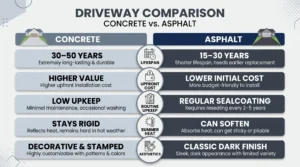
Difference Between Concrete and Asphalt in Tennessee Weather
Tennessee gives driveways a real workout. Summers are hot and humid, springs bring heavy rain, and winter nights swing above and below freezing. Here is how each material responds:
- Heat: Asphalt is flexible, which helps with movement, but strong sun can soften it and leave tire marks. Concrete stays rigid and reflects more light.
- Freezing and thawing: Water enters tiny pores or cracks, freezes, and expands. This cycle is known as freeze thaw damage, and it is a leading cause of surface wear on both materials.
- Clay soil: In much of Middle Tennessee, clay swells when wet and shrinks when dry. A driveway on a thin or poorly compacted base will crack and sink, no matter the surface.
- Heavy loads: Trucks, trailers, and RVs put extra stress on thin slabs and thin asphalt layers.
Maintenance: What Each Driveway Really Needs
Neither driveway is a pour it and forget it surface, but the routines are different.
Asphalt upkeep
- Sealcoat every few years to slow oxidation and keep the surface from turning brittle.
- Fill cracks early so water cannot reach the base.
- Plan for resurfacing as the layer wears down.
Concrete upkeep
- Wash off oil, grease, and winter salt residue.
- Keep joints and cracks sealed so water stays out.
- Add a sealer if you want extra stain and moisture protection. You can learn more in our guide on how often to seal concrete.
Cost vs Lifetime Value
Asphalt wins on the first price, but concrete driveway vs asphalt longevity changes the math once you spread the cost over the years. A university resource on choosing a driveway surface makes the same point, noting that concrete costs more but usually lasts longer.
Think about it this way. If one driveway lasts twice as long as another, the yearly cost can end up close, even when the sticker price is higher. Add the time and money you spend on sealcoating and resurfacing, and the gap often narrows more. Concrete repairs can cost more per fix, but you may need fewer of them.
When Asphalt Still Makes Sense
We build concrete, but an honest comparison should be balanced. Asphalt can be a smart choice when:
- You need the lowest upfront cost on a very long driveway.
- You want a quick patch and blend repair style.
- You plan to sell soon and want a solid surface at a lower price.
- You like the classic dark look.
Asphalt is also easy to recycle. Industry data from the National Asphalt Pavement Association on asphalt recycling shows that nearly all reclaimed asphalt gets reused, which is a real plus.
What Really Decides How Long a Driveway Lasts
Concrete driveway vs asphalt longevity depends on more than the surface material. Federal Highway Administration research on pavement performance points to materials and mix design, structural design, the environment, and the construction process as the main drivers of durability. The American Cement Association shares similar guidance on concrete pavement durability.
On our jobs, we focus on the things homeowners cannot see once the pour is done:
- A compacted gravel base and proper drainage slope.
- Concrete rated at 3,500 PSI or higher, with fiber reinforcement in the mix.
- Rebar or mesh where the slab needs it, such as for garages and heavy loads.
- Control joints placed to guide cracks.
- Proper curing so the slab reaches full strength.
When these steps are skipped, even the best material fails early. That is why the lowest bid can become the most expensive driveway.
Repair or Replace?
Not every damaged driveway needs a full tear out. Small, narrow cracks and minor surface wear can often be handled with concrete crack repair. Replacement is the better call when panels are broken into pieces, the surface is crumbling across large areas, or water keeps pooling because the slope is wrong. Our driveway replacement services include removal, base repair, and a fresh pour built for Tennessee conditions.
Add Curb Appeal Without Losing Durability
Concrete gives you design choices that asphalt cannot match. If you want a driveway that looks as good as it lasts, explore decorative concrete driveways with stamped patterns, borders, or colored finishes. A decorative entry can lift your home value and your curb appeal while keeping the strength of concrete.
How to Choose: A Simple Checklist
Ask yourself these questions before you decide:
- How long will I own this property?
- Is my budget focused on the first price or the lifetime cost?
- Do I want low upkeep or the lowest upfront bill?
- How much heavy equipment or towing will the driveway see?
- Does the site have clay soil, slopes, or drainage problems?
If most of your answers point to long term value and low upkeep, concrete is usually the stronger fit.
Get a Free Driveway Estimate in Tennessee
Every property is different, so the best way to settle the question is a real site visit. AMC Concrete has served Middle Tennessee for over 20 years. We hold contractor license 82787, we are a BBB accredited business, and we back new installations with a 3 year written workmanship warranty. Browse our full list of concrete services or check our service areas to see if we cover your town, including Columbia, Franklin, Spring Hill, and Brentwood.
Ready to compare real numbers for your driveway? Request a free estimate or call (931) 416-5131. Our team usually responds within 24 hours, and we will walk you through concrete driveway vs asphalt longevity for your exact soil, slope, and budget.
Frequently Asked Questions
Q: How does concrete driveway vs asphalt longevity compare in Tennessee?
A: A concrete driveway often lasts 30 to 50 years, while asphalt often lasts 15 to 30 years with sealcoating. A strong base, good drainage, and regular care decide where your driveway lands in those ranges.
Q: Is a concrete driveway worth the extra cost over asphalt?
A: Often, yes, if you plan to stay for many years. Concrete costs more up front, but it usually needs less upkeep and lasts longer, which can lower the yearly cost. Short term owners may prefer asphalt for savings.
Q: Which holds up better in Tennessee heat and winter freezes?
A: Concrete stays firm in summer heat, while asphalt can soften under strong sun. In freezes, both can crack when water gets in. A quality mix, a solid base, and sealed joints help either one last longer.
Q: Is asphalt easier to repair than concrete?
A: Asphalt is usually easier to patch, and repairs blend in well. Concrete repairs can show more, but concrete often needs fewer repairs overall. Fix cracks early on either surface to keep water out of the base.
Q: Do I need to seal a concrete driveway, and how often?
A: Sealing is optional but helpful. Many owners reseal every few years to protect against stains, water, and winter salt. Check your sealer label for its recoat window, and clean the slab well before you apply it.
Final Thoughts
On concrete driveway vs asphalt longevity, concrete usually wins on lifespan, upkeep, and long term value, while asphalt wins on upfront cost. The best driveway is the one built on a strong base, drained well, and cared for on schedule. Whichever way you lean, AMC Concrete can help you compare options and plan the right driveway for your property. Call us today at (931) 416-5131 and get a clear answer before you spend a dollar.