Spotting new lines in your slab once the cold season ends is frustrating, and concrete driveway cracks after winter are one of the most common problems homeowners across Middle Tennessee call us about. Some of those cracks are harmless surface lines. Others point to water damage, soil movement, or a slab that was never built for freezing weather. If your driveway is past saving, our page on concrete driveway replacement in Columbia, TN shows how we rebuild from the base up. Either way, this guide helps you read what you are seeing before you spend money.
Not sure whether to patch or start over? Our guide on how to repair or replace a concrete driveway walks through that decision, and this article covers the winter causes behind it. You will learn what freezing weather does to concrete, how to tell a cosmetic crack from a serious one, and what to do next.
Why Middle Tennessee Winters Are Hard on Concrete
Winters here are milder than up north, but they are active. Concrete does not need a deep freeze to suffer. It needs water and repeated swings around freezing. The Middle Tennessee climate normals from the National Weather Service Nashville office show about 67 days a year with a low at or below 32 degrees, including 19 days in January, 15 in February, and 16 in December. The normal January low is 30.1 degrees and the normal high is 49.1, so a driveway can freeze overnight and thaw by afternoon. Nashville also averages about 50 inches of precipitation in a normal year, which gives your slab plenty of water to absorb.
How Freeze Thaw Cycles Cause Concrete Driveway Cracks After Winter
Concrete is porous. When water soaks in and freezes, it expands, and that pressure builds inside the slab. The Federal Highway Administration describes freeze thaw damage in concrete pavement as the breakdown of saturated cement paste after repeated freezing and thawing, and it notes that deicing chemicals can make the damage worse. After one winter you may see hairline cracks. After several, you may see flaking, scaling, and wider cracks near joints and edges.
Other Causes Besides Freeze Thaw
Freezing is rarely the only culprit. Winter simply exposes weak spots that were already there. Our full guide to the causes of concrete driveway cracking covers each one, and these are the most common.
- Soil movement. Clay in Maury and Williamson Counties swells when wet and shrinks when dry, which leaves gaps under panels.
- Weak base. Concrete poured over soft or poorly compacted soil settles unevenly.
- Missing control joints. Without planned joints, cracks form wherever the slab decides to move.
- Too much water or poor finishing. This weakens the surface and invites scaling.
- Poor curing. Concrete that dries too fast starts life with tiny cracks.
- Thin slabs and heavy loads. Delivery trucks and dumpsters can overstress a light driveway.
Key Points to Remember
Not all concrete driveway cracks after winter mean the same thing. Keep these points in mind as you inspect your slab.
- Thin, tight cracks that have not changed in a year are often cosmetic.
- Cracks that widen, sink, or leave one side higher need a closer look.
- Water is the main enemy, because trapped water freezes and expands.
- Fixing the cause matters more than filling the crack.
- Small problems tend to grow when water keeps getting in.
The Difference Between Hairline Cracks and Structural Cracks
Walk your driveway after a rain and compare what you see to this table. It makes the next step much clearer.
| Feature | Hairline Cracks | Structural Cracks |
| Appearance | Thin and tight | Wide, often fits a coin |
| Surface level | Both sides even | One side higher or sunken |
| Usual cause | Shrinkage and temperature swings | Soil movement, weak base, or drainage failure |
| Risk level | Low, but water can enter | Higher, since movement continues |
| Typical response | Seal and monitor | Find the cause, then level, repair, or replace |
Why the First Freeze Matters for New Concrete
A driveway poured in fall faces its first freeze while the concrete is still young and holding water. Concrete that freezes before it gains strength can weaken and scale. That is why timing and protection matter so much, and we explain how we plan around cold nights in our post on pouring a concrete driveway in October. If your driveway is only a year or two old, early winter exposure may explain the damage you see now.
Scaling and Other Surface Damage
Not every problem is a crack. Scaling looks like flaking or peeling on the surface, and it often shows up after a freezing season. Crazing, popouts, and map cracking can also appear. The National Ready Mixed Concrete Association keeps a library of short technical sheets in its concrete cracking and scaling resources, and they explain how each type of surface damage forms. Surface damage alone does not always mean the slab has failed, Surface damage alone does not always mean the slab has failed, but it does mean water is getting in. If you spot other damage too, learn the 7 signs your concrete needs repair.
Deicing Salt and Your Driveway
Salt is a common winter habit, and it is hard on concrete. A presentation from structural engineers on surface scaling and deicing salt explains that freeze scaling is caused by water and made worse by deicers. Their advice for new concrete is to skip deicers during the first winter and to protect the surface with a silane or siloxane sealer. Clean sand gives traction without the damage, and rinsing off leftover salt helps too.
How to Repair Concrete Driveway Cracks After Winter
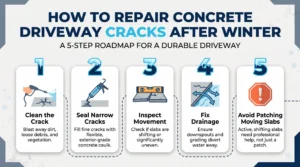
Repair starts with figuring out why the crack formed. Here is a simple path to follow.
- Clean the crack. Remove dirt, loose debris, and plant growth, then let the area dry.
- Seal narrow, stable cracks. A flexible filler keeps water out of cracks that are not moving.
- Look for movement. Panels that rock, sink, or sit at different heights need a professional check.
- Fix drainage. Water that pools or flows toward the garage will keep causing damage.
- Do not patch a moving slab. Filling the crack will not stop soil movement underneath.
The American Concrete Institute offers crack repair guidance for gravity fed resin, and that guide applies only to cracks that are not moving. It also says the cause of the damage must be assessed before any repair begins.
When Replacement Makes More Sense
If you see concrete driveway cracks after winter across many panels, replacement may be the better investment. Look for a network of cracks, a crumbling surface, rocking panels, or patches that failed within a season or two. A new pour lets us remove soft soil, compact a gravel base, place the right thickness, and cut joints on a proper layout. Every AMC pour uses a 3,500 PSI minimum mix with Fibermix fiber reinforcement, and each project carries a 3 year written workmanship warranty. You can see finished work in our completed driveway projects to judge the quality for yourself.
How to Prevent Winter Damage Next Year
A few habits protect both old and new driveways.
- Seal the surface. A penetrating sealer slows water entry, and our guide on how often to seal concrete explains timing.
- Direct water away. Point gutters and downspouts away from driveway edges.
- Use sand, not salt. Sand gives traction and does not attack the surface.
- Limit heavy loads. Keep trucks and equipment off older or thin slabs.
- Watch your cracks. Note any that widen or sink after heavy rain.
Frequently Asked Questions
Q: Are hairline cracks in my driveway after winter a big problem?
A: Usually not. Thin, tight cracks often come from shrinkage or temperature swings and stay cosmetic. Watch them for widening, sinking, or one side sitting higher. Those changes point to soil or drainage trouble.
Q: Can I fix a cracked driveway myself or should I hire a contractor?
A: You can seal narrow, stable cracks with a flexible filler. Wide cracks, uneven panels, or cracks that keep returning point to base or drainage trouble, so a contractor should check the slab before you spend more.
Q: Is it safe to use rock salt on my concrete driveway in winter?
A: Salt can speed up scaling, especially on young concrete. Sand gives traction without the damage. New driveways should skip deicers entirely during their first winter, and a sealer adds protection afterward.
Q: Why do driveways in Middle Tennessee crack even though our winters are mild?
A: Concrete only needs water and repeated freezing to take damage. Clay soil that swells and shrinks adds more stress. Mild winters still bring many nights near freezing, so small weak spots grow each season.
Q: When should I schedule driveway crack repair after winter?
A: Fix drainage problems and sunken panels first, since wet weather makes them worse. Sealing works best once the slab is clean and dry. A site visit can tell you whether repair or replacement fits your driveway.
Final Thoughts
Understanding concrete driveway cracks after winter starts with knowing what caused them. Thin cracks are often harmless, while wide, sunken, or spreading cracks point to water, soil, or construction problems that need attention. Seal what you can, fix drainage, skip the salt, and get a professional opinion before you patch a slab that is still moving.
AMC Concrete is a veteran owned contractor in Columbia, licensed under Tennessee contractor license 82796. When you are ready for a straight answer on your slab, request a free estimate or call us at 931-416-5131.