Leaves are down, mornings are crisp, and the first freeze is close. If you wonder when to seal concrete driveway surfaces before winter, the answer depends on both the calendar and the thermometer. Sealing too early wastes the product on a dirty slab, while sealing too late means the sealer never cures properly.
This guide explains the best timing, the right sealer, and the prep work that makes the job last. We base it on more than 20 years of pouring and protecting driveways across Middle Tennessee.
Key Takeaways
- Yes, you should seal your driveway before winter, because sealer blocks the water that causes freeze-thaw damage.
- Apply sealer when air and surface temperatures stay at or above the label’s minimum, usually 40°F to 50°F, for at least 24 to 48 hours.
- New concrete needs about 28 days to cure before you seal it.
- Penetrating sealers protect best against deicer salts.
- Sealing does not repair cracks, so fix them first.
When to Seal Concrete Driveway Slabs Before Winter: The Short Answer
Seal your driveway in early to mid fall, once the slab is clean and completely dry. In Middle Tennessee, that window usually runs from September through early November. Daytime temperatures should stay above 50°F, and nighttime lows should not drop below the sealer’s stated minimum.
Weather matters more than dates. A warm, dry week in late November works better than a damp, chilly week in October. Therefore, check the five-day forecast before you start, and read the product label for its exact temperature range.
Rain also ruins a fresh coat. Most sealers need 24 hours without rain, and some need 48. Dew and heavy fog count too, so avoid sealing late in the evening when moisture settles on the slab.
Why Sealing Before Winter Matters
Tennessee winters swing above and below freezing again and again. Water enters tiny pores in unsealed concrete, freezes, and expands by roughly nine percent. Then the ice thaws, and the cycle repeats. Over time, the slab flakes, pits, and cracks.
A quality sealer reduces how much water and deicer the slab absorbs. As a result, freeze-thaw cycles do less harm. Sealing also makes snow and ice release more easily, so you shovel less and use less deicer.
For help choosing deicers, read our guide on what salt is safe for your concrete driveway.
Which Sealer Works Best
Not every sealer suits a driveway. Compare the two most common types:
| Sealer Type | How It Works | Typical Lifespan | Approx. Minimum Temperature | Best For |
|---|---|---|---|---|
| Penetrating (silane or siloxane) | Soaks in and repels water from within | 5 to 10 years | Around 40°F | Driveways exposed to deicer and freeze-thaw |
| Acrylic (film-forming) | Forms a protective layer on the surface | 2 to 3 years | Around 50°F | Enhancing color and sheen |
Lifespan and temperature limits vary by brand, so always follow the label. For most Tennessee driveways, a penetrating sealer offers the strongest protection against salt and moisture. Acrylic sealers look glossy, but they can turn slippery when wet or icy unless you mix in an anti-slip additive.
Prepare the Slab First
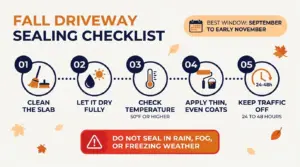
Preparation decides how long the sealer lasts. Follow these steps:
- Clean thoroughly. Remove oil, grease, dirt, and old salt residue with a concrete cleaner and a stiff brush.
- Pressure wash. Rinse the slab well, then let it dry completely, which often takes 24 to 48 hours.
- Repair cracks and chips. Fill them with a suitable concrete patch or flexible crack filler before you seal.
- Check the weather. Confirm a dry stretch and safe temperatures before you open the can.
- Apply thin, even coats. Thick coats can turn cloudy or peel, so two light passes beat one heavy one.
- Keep traffic off. Stay off the surface for the time the label requires, and keep vehicles off longer.
Sealer locks moisture in as well as out. Consequently, a damp slab can trap water beneath the coating and cause a white haze. When in doubt, wait another day.
New Driveways: Wait Before You Seal
Homeowners who ask when to seal concrete driveway slabs poured this year often rush the job. Fresh concrete needs about 28 days to cure and release most of its internal moisture. Sealing too soon can trap that moisture and cloud the finish.
If we poured your driveway in late fall, plan to seal once it reaches that 28-day mark and the weather cooperates. Meanwhile, skip chemical deicers and use sand for traction. Our crew pours every driveway with a 3,500 PSI minimum mix, Fibermix fiber reinforcement, and a compacted gravel base, and we explain the right sealing schedule at the final walkthrough.
Does Your Driveway Need Repair Instead?
Sealing protects sound concrete, but it cannot fix structural damage. Widening cracks, sunken slabs, and heavy surface scaling need repair or replacement first. A sealer over a failing slab only hides the problem for a season.
Check your driveway for these warning signs before you buy sealer. Our list of the top 7 signs your concrete needs repair before it’s too late walks you through each one. If you already see damage from last winter, read about concrete driveway cracks after winter in TN to learn what caused it.
When damage runs deep, replacement often costs less than repeated repairs. Our concrete driveway installation service covers excavation, base preparation, reinforcement, and finishing, and every project carries a 3-year written workmanship warranty. Right now, we also include a free patio with every new driveway, and you can preview ideas in our concrete patio designs.
What About Your Patio?
Driveways and patios face different loads and different timing. A patio sees less weight but often more sun and standing water. For a schedule built around patios, read our guide on how often to seal a concrete patio.
What If You Miss the Fall Window?
Cold snaps arrive early some years, and the window closes before you find time to seal. In that case, do not force a cold-weather application. Sealer that cures below its minimum temperature can turn white, blister, or peel.
Instead, take these steps:
- Keep the slab clean and shovel snow early.
- Use sand for traction, and limit chemical deicers.
- Fill small cracks when a warm, dry day appears.
- Plan to seal in spring, once temperatures stay above the label minimum.
Alternatively, call a professional who can check the slab and recommend the safest next step.
Why Homeowners Trust AMC Concrete
Adam Mills founded AMC Concrete as a veteran-owned company based in Columbia, Tennessee. Our team has completed more than 100 projects across Maury and Williamson Counties. We hold General contractor license #82787, carry full insurance, and maintain a BBB accredited business profile.
You can review our completed projects in the gallery or read what neighbors say on our testimonials page. We also serve Columbia, Spring Hill, Franklin, and Brentwood with dedicated driveway replacement pages.
Frequently Asked Questions
When to seal concrete driveway surfaces before winter in Tennessee?
Seal in early to mid fall, from September through early November, when temperatures stay above the sealer’s minimum and the slab is clean and dry. Check the forecast for 24 to 48 hours without rain.
What temperature is too cold to seal a driveway?
Most acrylic sealers need 50°F or higher, and some penetrating sealers work down to about 40°F. Follow the label for your product.
Should I seal a new concrete driveway before its first winter?
Yes, but only after it cures for about 28 days. Until then, avoid chemical deicers and use sand for traction.
Does sealer make a driveway slippery?
Some film-forming sealers do when wet or icy. Penetrating sealers rarely change traction, and an anti-slip additive helps with acrylic types.
How long does driveway sealer last?
Acrylic sealers typically last two to three years, while penetrating sealers often last five years or more. Traffic, weather, and salt exposure all affect the result.
Ready to Protect Your Driveway Before the Freeze?
Whether you want a sealing recommendation, a crack repair, or a brand-new slab, our team gives you honest advice. Request a free estimate or call (931) 416-5131 today, before the next cold snap arrives.