The pool is closed, the cover is on, and the leaves keep falling. Before the first freeze, one question remains: how do you winterize concrete pool deck surfaces so they survive Tennessee’s freeze-thaw swings? Many owners protect the pool carefully and forget the slab around it. Yet the deck takes the same winter beating as a driveway, and it also deals with splashed water, pool chemicals, and runoff.
This guide walks you through a simple checklist. It comes from more than 20 years of pouring and protecting concrete across Middle Tennessee. You will learn what to clean, what to seal, how to handle water, and which habits to avoid.
Key Takeaways
- Clean, dry, and inspect the deck before the first freeze.
- Fill small cracks and re-seal expansion joints, because water in gaps causes most winter damage.
- Seal the slab only when temperatures stay above the sealer’s minimum.
- Keep rock salt and metal shovels off the deck.
- Book a spring inspection if you spot flaking, widening cracks, or sunken areas.
How to Winterize Concrete Pool Deck Slabs: The Short Answer
Start in October or early November, once the pool is closed and before nights drop below freezing. First, clear and clean the deck. Next, repair cracks and joints, then confirm that water drains away from the slab. Finally, seal the surface if the forecast allows, and manage ice with gentle methods.
Each step cuts down the water that enters the concrete. Less water means less freezing inside the slab, and that is the heart of pool deck winter care.
What Winter Does to a Concrete Pool Deck
Concrete looks solid, but it contains tiny pores. Water seeps into those pores, freezes, and expands by roughly nine percent. Then the ice thaws, and the cycle repeats. Middle Tennessee swings above and below 32°F many times each winter, so concrete pool deck freeze damage shows up as cracks, flaking, and rough, pitted surfaces.
Pool decks face extra risks. Splashed water keeps the slab damp late into fall. Pool chemicals and oils leave residue that blocks sealer. In addition, expansion joints around coping and pool edges collect water, and clay soil under the slab shifts as it freezes and thaws.
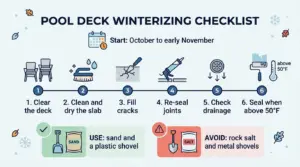
Close the Pool Deck for Winter: Step-by-Step Checklist
Work through these steps in order. Each one sets up the next.
- Clear the deck. Remove furniture, planters, toys, and grills. Metal items left behind can leave rust stains, and heavy objects hide cracks.
- Clean the surface. Sweep away leaves and debris, then scrub algae, mildew, oil, and chemical residue with a stiff brush and a concrete cleaner. Rinse well, and let the slab dry for 24 to 48 hours.
- Inspect for cracks. Walk the entire deck and look for hairline cracks, chips, and raised edges. Fill small cracks with a flexible exterior crack filler. Call a professional for anything wider than a credit card’s thickness or any slab that sits unevenly.
- Re-seal expansion joints. Joints let concrete move without breaking. When the old caulk shrinks or peels, water gets in. Replace it with a flexible, exterior-rated joint sealant before the cold arrives.
- Check drainage. Clear deck drains, trench drains, and nearby gutters. Confirm that downspouts and irrigation heads send water away from the slab, because standing water turns into ice sheets.
- Seal the slab. A penetrating sealer blocks water and salt from soaking in. Apply it only when the surface is clean, dry, and above the label’s minimum temperature, usually 40°F to 50°F.
- Manage the pool cover. Pump off cover water before it freezes, and direct the discharge into the yard instead of across the deck.
- Plan your ice control. Decide now how you will handle ice, so you do not grab rock salt in a panic. The next section explains your options.
Pool Deck Timing at a Glance
| Task | Best Timing | Why It Matters |
|---|---|---|
| Clean and dry the slab | Early to mid fall | Sealer and crack filler bond to clean concrete |
| Fill cracks and re-seal joints | Before the first freeze | Stops water from entering gaps |
| Clear drains and fix runoff | Before the first freeze | Prevents ice sheets and pooling |
| Apply sealer | When temperatures hold above the label minimum | Reduces water and salt absorption |
| Remove cover water | After each heavy rain or snowmelt | Keeps ice off the deck |
| Inspect for damage | Late winter or early spring | Catches problems before pool season |
Sealing: Choose Traction Over Shine
Sealing is the single most effective protection, but pool decks need extra thought. Wet feet and slick surfaces create real safety risks. For that reason, choose a penetrating sealer, which soaks into the concrete and rarely changes traction. If you prefer a glossy acrylic sealer, ask for an anti-slip additive.
Timing matters as much as product choice. Our guide on how often to seal concrete patio surfaces explains typical sealing schedules, and the same logic applies to your deck. If cold weather has already arrived, do not force a coat. Sealer that cures below its minimum temperature can turn white or peel, so wait for a warm, dry stretch or plan to seal in spring.
Ice and Snow: What to Use and What to Skip
Ice on a pool deck is a safety problem and a concrete problem. Still, harsh fixes make things worse.
- Skip rock salt. It increases freeze-thaw stress and scaling, and it leaves residue near coping and pool equipment.
- Avoid fertilizer-style ice melts. Products with ammonium nitrate or ammonium sulfate attack concrete chemically.
- Use a plastic shovel. Metal blades chip edges and joints.
- Choose sand for traction. Sweep it up in spring before you open the pool, so it does not wash in.
For a full breakdown of gentle options, read our guide on what salt is safe for your concrete driveway. The same products apply to a pool deck, although you should always use them lightly.
A Quick Warning About Draining the Pool
Never drain a concrete pool fully without advice from a pool professional. In some Tennessee soils, high groundwater can push an empty pool upward and damage both the pool and the deck. Therefore, ask your pool service about the right water level before you open any drain.
Protect the Rest of Your Outdoor Space
Your deck is only one part of the yard. A driveway, walkway, and patio face the same freeze-thaw cycle. For a broader checklist, read our guide on how to protect your concrete driveway and patio during winter. If you plan to seal your driveway too, our post on when to seal a concrete driveway before winter covers the timing.
Signs Your Pool Deck Needs Professional Repair
Winter often reveals problems that were quietly developing. Watch for these signs in late winter and early spring:
- Flaking or peeling surfaces that expose rough aggregate
- Cracks that widen or run across the slab
- Raised or sunken sections near joints and coping
- Water that pools instead of draining
- Surface stains that return after cleaning
Small issues usually need only filler and a fresh coat of sealer. However, widespread scaling or a sinking slab may call for resurfacing or replacement. Our concrete pool deck service covers new installation and repair, and we also build custom looks with stamped concrete and concrete patio designs that match your yard.
Why Homeowners Trust AMC Concrete
Adam Mills founded AMC Concrete as a veteran-owned company based in Columbia, Tennessee. Our team has completed more than 100 projects across Maury and Williamson Counties. We hold Tennessee contractor license #82787, carry full insurance, and maintain a BBB accredited business profile.
Every pour uses a 3,500 PSI minimum mix with Fibermix fiber reinforcement over a compacted gravel base, and every project carries a 3-year written workmanship warranty. You can review our work in the project gallery or read what neighbors say on our testimonials page.
Frequently Asked Questions
How do I winterize concrete pool deck surfaces in Tennessee?
Clean and dry the slab, fill small cracks, re-seal expansion joints, clear the drains, and apply a penetrating sealer when temperatures allow. Skip rock salt, and use a plastic shovel for snow.
When should I close the pool deck for winter?
Start in October or early November, before nights drop below freezing. The slab needs 24 to 48 hours to dry after cleaning, so leave time for the full process.
Is it okay to use salt on a concrete pool deck?
Avoid rock salt, because it worsens scaling and leaves residue near the pool. Use sand for traction, and sweep it away before pool season.
Does sealing a pool deck make it slippery?
Penetrating sealers rarely change traction. Glossy acrylic sealers can feel slick when wet, so ask for an anti-slip additive.
Can freezing weather crack a pool deck?
Yes. Water enters tiny pores and gaps, freezes, and expands, which leads to cracks, flaking, and uneven slabs over repeated cycles.
Book a Winter Checklist Visit
Not sure whether your deck needs sealing, repair, or a full resurfacing in spring? Let our team check it for you. We walk the slab, flag problem areas, and give you honest advice before the thaw. Request a free estimate or call (931) 416-5131 to schedule your visit.