Why does concrete have small holes? It is a common question from Middle Tennessee homeowners, and the answer depends on where the holes are and how big they are. Small pits in a basement wall, a driveway, or a patio can come from trapped air, a stone near the surface that cracked, or winter damage. AMC Concrete has poured and repaired slabs across the region, and our crews handling concrete slab installation in Columbia, TN see these holes on both new and older concrete.
Many small holes are cosmetic, but some are early warning signs. Water can get into holes and make winter damage worse, so a sealed surface helps. Our guide on how often to seal concrete patio surfaces explains how sealing slows moisture and protects the surface.
Key Points at a Glance
- Small holes in concrete are often cosmetic, but the cause and the size matter.
- Bugholes mostly show up on vertical formed concrete such as walls and foundations.
- On driveways, patios, and sidewalks, popouts and surface pitting are more common.
- Honeycombing is different and can be serious, so severe cases need repair.
- Water, freezing weather, and deicing salt can make small holes worse.
- Check where the holes are, how big they are, and whether they are spreading.
Why Does Concrete Have Small Holes? Start With Where and How Big
Before you decide what to do, look at the pattern. Ask yourself:
- Where are the holes? Walls and foundation faces point to air pockets. Driveways and patios point to popouts or surface wear.
- What is the shape? Round and shallow often means air. A cone shaped cavity often means a popout.
- How big are they? Tiny pits are different from holes that show loose stones.
- Is anything crumbling? Loose or sandy areas are a bigger concern.
- Are they spreading? New holes after each winter point to a surface problem.
Take photos in daylight and add a coin for scale. Photos help you track changes and give a contractor useful information later.
Bugholes: Small Air Pockets in the Surface
Bugholes are small holes that form when air gets trapped against the form during placement. To see what bugholes are and why they form, the what bugholes are and why they form page explains that they are small holes, smaller than about a quarter inch, and are usually linked to too much sand, a lean mix, or too much vibration during placement. It also says they should be monitored because they may affect durability.
Sources vary on size. ForConstructionPros says bugholes are usually under five eighths of an inch and normal for vertical cast in place concrete, and not considered a defect unless they exceed the size allowed by the project.
Bugholes mostly appear on walls, foundations, and other formed vertical concrete. They are less common on a finished driveway or patio.
Honeycombing and Consolidation
Honeycombing is a different problem. It looks like exposed stones with no mortar around them, and it can go deep into the concrete. The dam safety page says honeycombing can come from a poorly graded mix, stones that are too large, or too little vibration when the concrete is placed. It also warns that moisture can get into honeycombed areas and make freeze thaw damage worse, and it says severe honeycombing should be repaired.
ForConstructionPros explains how consolidation and surface air voids are linked. It describes honeycomb, cold joints, and excess surface air voids as common blemishes from poor consolidation, and says vibration should continue until large air bubbles stop rising.
If you see exposed stones near edges, corners, or footings, do not treat it as a simple bughole. Have a pro look at it.
Popouts: Small Cone Shaped Pits on Slabs
If your holes are on a driveway, sidewalk, or patio, popouts are a leading suspect. NRMCA explains aggregate popouts as small, generally cone shaped cavities in a horizontal surface, left after a stone near the surface breaks. The cavity can range from a quarter inch to a few inches across, and part of the broken stone is often found at the bottom.
According to NRMCA, physical popouts happen when a porous stone absorbs water and the water freezes and expands. They are typically seen on exterior flatwork in freezing, moist climates, often in the first year. A chemical reaction in the aggregate can also cause them.
NRMCA also says most popouts are cosmetic, but a large number can let water and harmful chemicals into the concrete. It describes repair as chipping out the remaining stone, cleaning the hole, and filling it with a repair material that follows the maker’s directions, and it warns the color may not match.
Freeze Thaw, Deicing Salt, and Pitting
Middle Tennessee winters swing above and below freezing, and repeated freeze-thaw damage in winter can turn a smooth surface into a pitted one. Water soaks in, freezes, expands, and pushes off small pieces.
Federal Highway Administration research on freeze thaw damage in concrete pavement says deicing chemicals can amplify freeze thaw deterioration. A presentation shared by UConn engineers on surface scaling and deicing salt lists common causes such as low air content, an overworked surface, poor curing, early exposure, and deicing salt. It also advises skipping deicers during the first winter if possible and protecting the surface with a silane or siloxane sealer.
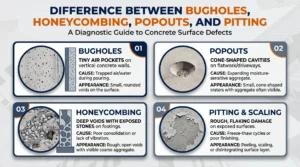
Difference Between Bugholes, Honeycombing, Popouts, and Pitting
When homeowners ask why does concrete have small holes, they are often describing four different things. This table helps you tell them apart.
| Problem | Where It Shows Up | What It Looks Like | Usual Concern |
| Bugholes | Vertical formed concrete such as walls and foundations | Small round or irregular pits, usually under a quarter to five eighths of an inch depending on the source | Often cosmetic, so monitor |
| Popouts | Horizontal surfaces such as driveways, patios, and sidewalks | Cone shaped cavity from a quarter inch to a few inches, often with a broken stone inside | Usually cosmetic, but many can let water in |
| Honeycombing | Areas that were poorly consolidated, such as edges and corners | Exposed stones with little or no mortar, sometimes deep | Can be serious, so repair if severe |
| Pitting and scaling | Exterior slabs exposed to freeze thaw and deicing salt | Rough, pitted, or flaking top layer | Tends to worsen each winter |
Built Right From the Start
Good prep reduces many of these problems. A compacted gravel base, a properly mixed and cured slab, careful finishing, and good drainage all help the surface last. You can see how our crews finish slabs in our completed concrete projects.
Small Holes on Driveways and Patios
Why does concrete have small holes on a driveway or patio when there were no walls or forms? Flatwork is finished by hand, so the surface depends on timing and technique. Common causes include:
- A stone near the surface that cracked and popped out
- Finishing too early, which can trap air or bleed water under the surface
- Poor curing that leaves a weak top layer
- Deicing salt on young concrete
- Standing water that freezes on the surface
NRMCA notes that popoffs, which are small areas where the mortar flakes off, are often linked to improper finishing or lack of curing, and that deicing salts can make them worse.
Other Surface Problems to Check
Small holes are not the only surface issue. Check for white powder, flaking, dusting, and cracks, because they point to different causes. If you also see a white film or powder on the slab, that is a separate issue from holes, and it usually points to moisture and salts moving through the concrete.
Are Small Holes Serious? When to Repair and When to Replace
Often they are cosmetic, but not always. Watch for these signs that a closer look is needed:
- Holes that keep spreading or multiply each winter
- Exposed stones with no mortar around them
- A crumbling, sandy, or flaking surface
- Cracks that connect the holes
- Water that pools and stays on the slab
If cracks are part of the picture, read about the other causes of driveway cracks. For bigger decisions, our guide on how to repair or replace a concrete driveway explains when patching is enough and when the slab has reached the end of its life.
How to Fix Small Holes
Match the fix to the cause:
- Bugholes: Many are left alone. If the look bothers you, a thin cosmetic patch can fill them, and you should ask a pro first if the surface will be painted or coated.
- Popouts: Chip out the loose piece, clean the hole, and fill it with a repair material following the label. Test the color in a small area, since it can be hard to match.
- Too many popouts: A thin bonded overlay can restore a uniform look, and this is a job for a pro.
- Honeycombing: Have it assessed. Severe or deep cases need proper repair.
- Pitting and scaling: Cleaning and patching will not stop the cause. Fix drainage, reduce salt, and seal the surface.
For deep, large, or repeating damage, ask a professional before you spend money on patches.
How to Prevent Small Holes
- Use a well mixed, properly cured slab
- Keep water from pooling by improving drainage
- Skip deicing salt on new concrete in its first winter
- Rinse salt off the surface when temperatures rise
- Seal the surface with a breathable sealer
- Ask your contractor about finishing, curing, and the mix before the pour
Frequently Asked Questions
Q: Why does concrete have small holes after a Middle Tennessee winter?
A: Winter water can soak into concrete or stones near the surface, then freeze and expand. That can pop off small pieces and leave pits. Deicing salt and a weak surface can make the damage worse over time.
Q: Are small holes in concrete a structural problem?
A: Often they are cosmetic, especially bugholes and single popouts. Severe honeycombing, deep voids, or crumbling areas can be more serious. Have a professional check holes that spread or keep getting worse.
Q: Can I fill small holes in concrete myself?
A: Often yes, for small shallow holes. Clean out loose bits, then fill with a repair product and follow the label. Color may not match. Ask a pro about deep voids, large areas, or holes that keep coming back.
Q: What is the difference between bugholes and popouts?
A: Bugholes are small air pockets, mostly on vertical formed concrete like walls. Popouts are cone shaped cavities on horizontal surfaces like driveways, caused by a stone near the surface that cracks open.
Q: How can I stop small holes from forming on a new concrete slab?
A: Use a well mixed, properly cured slab with good drainage. Avoid deicing salt on new concrete during its first winter, and consider a sealer. Ask your contractor about finishing, curing, and the mix before the pour.
Final Thoughts
Asking why does concrete have small holes is the right first step, because the answer decides the fix. Tiny air pockets on a wall are usually cosmetic, popouts on a driveway are often minor, and exposed stones or spreading damage deserve a closer look. Watch the holes over time, keep water off the slab, and protect it before winter.
Not sure what you are seeing? Get a free inspection or call AMC Concrete at 931-416-5131. We are a veteran owned team serving Columbia and the surrounding area, and our contractor license number is 82787.